The global infrastructure landscape relies heavily on the precision and durability of joining components, making the role of stainless steel fasteners manufacturers critical to modern engineering. These specialized producers ensure that bridges, skyscrapers, and industrial machinery remain secure under extreme environmental stress, preventing catastrophic failures through rigorous material science. Understanding the nuances of fastener production is essential for procurement managers who prioritize long-term structural integrity over short-term cost savings.
In an era where sustainability and lifespan are paramount, the shift toward high-grade alloys has placed stainless steel fasteners manufacturers at the forefront of industrial innovation. By adhering to international standards such as ISO, DIN, and ASTM, these manufacturers provide the reliability needed for sectors ranging from aerospace to marine engineering. The ability to resist corrosion while maintaining high tensile strength makes these components indispensable for any project exposed to moisture or chemical agents.
Selecting the right partner among various stainless steel fasteners manufacturers ensures that your project meets strict safety regulations and operational requirements. From M8 to M30 sizing and various grade options like A2 and A4, the technical specifications provided by expert manufacturers determine the ultimate success of the assembly.

The Role of Material Standards in Fastener Production
The adherence to international standards is what separates professional stainless steel fasteners manufacturers from generic producers. By following strict guidelines such as ISO, DIN, ANSI, ASME, ASTM, BS, AS, and JIS, manufacturers ensure that a bolt produced in one part of the world fits perfectly into a nut produced in another. This standardization is the backbone of global trade and engineering, allowing for seamless replacement and assembly of complex machinery.
Furthermore, the integration of these standards allows for precise grading, such as the distinction between A2 and A4 stainless steel. While A2 is suitable for general outdoor use, A4 provides the essential molybdenum addition required for marine environments. Leading manufacturers implement these standards not just as a checklist, but as a quality assurance framework that guarantees the safety of the final structure.
Core Technical Specifications for Industrial Fasteners
Technical precision starts with material selection, where stainless steel fasteners manufacturers offer a wide array of options including Q235, 35K, 45K, 40Cr, B7, and 20MnTiB. These materials are chosen based on the required mechanical properties, such as tensile strength and hardness. For instance, carbon steel grades like 4.8, 8.8, and 10.9 provide different levels of load-bearing capacity, ensuring that the fastener can withstand the specific stresses of its intended application.
The sizing range, typically spanning from M8 to M30, allows for versatility across various structural scales. Whether it is a small hardware washer or a heavy-duty bolt for a bridge, the dimensional accuracy must be absolute to prevent loosening over time. This precision is achieved through advanced cold-heading and threading processes that minimize material waste while maximizing the structural integrity of the thread.
Surface treatment is the final line of defense against environmental degradation. Options such as BZP (Bright Zinc Plated), YZP (Yellow Zinc Plated), or fully customizable coatings are applied to enhance corrosion resistance. By combining the right material grade with a specific surface finish, manufacturers can tailor a product that lasts for decades even in the most corrosive industrial atmospheres.
Evaluating the Quality of Stainless Steel Fasteners Manufacturers
When sourcing components, the ability of stainless steel fasteners manufacturers to provide free samples is a key indicator of their confidence in product quality. A transparent manufacturer will allow engineers to test the fit, finish, and strength of a sample batch before committing to a minimum order quantity (MOQ), which is typically around 1000 pieces for custom runs.
The internal quality control processes used by top-tier stainless steel fasteners manufacturers often include spectroscopic analysis to verify material composition and hardness testing to ensure the grade (e.g., 8.8 or 10.9) is accurate. This prevents the risk of "material mixing," where a lower-grade steel is passed off as high-strength, which could lead to structural failure.
Logistical reliability also plays a role in quality evaluation. Professional stainless steel fasteners manufacturers offer customizable packing options, such as cartons (ctn) or pallets (plt), ensuring that the products arrive at the job site without damage. This attention to detail in packaging reflects the overall commitment to quality that defines a leading industry supplier.
Comparative Performance of Fastener Materials
Different materials provide distinct advantages depending on the operational environment. While carbon steel offers exceptional strength for structural frames, stainless steel is the gold standard for hygiene and corrosion resistance. Choosing between them requires a deep understanding of the trade-off between raw strength and environmental endurance.
To better visualize the performance metrics provided by experienced stainless steel fasteners manufacturers, we can look at the relative ratings of different material categories across key performance indicators such as corrosion resistance and tensile strength.
Material Performance Ratings from Stainless Steel Fasteners Manufacturers
Global Applications of High-Strength Fastening Solutions
The application of fasteners extends far beyond simple construction. In the energy sector, stainless steel fasteners manufacturers provide the specialized bolts and nuts required for wind turbine assemblies and solar panel racking, where exposure to the elements is constant. The use of A4 stainless steel is particularly prevalent in offshore oil rigs, where salt spray would destroy standard carbon steel in a matter of weeks.
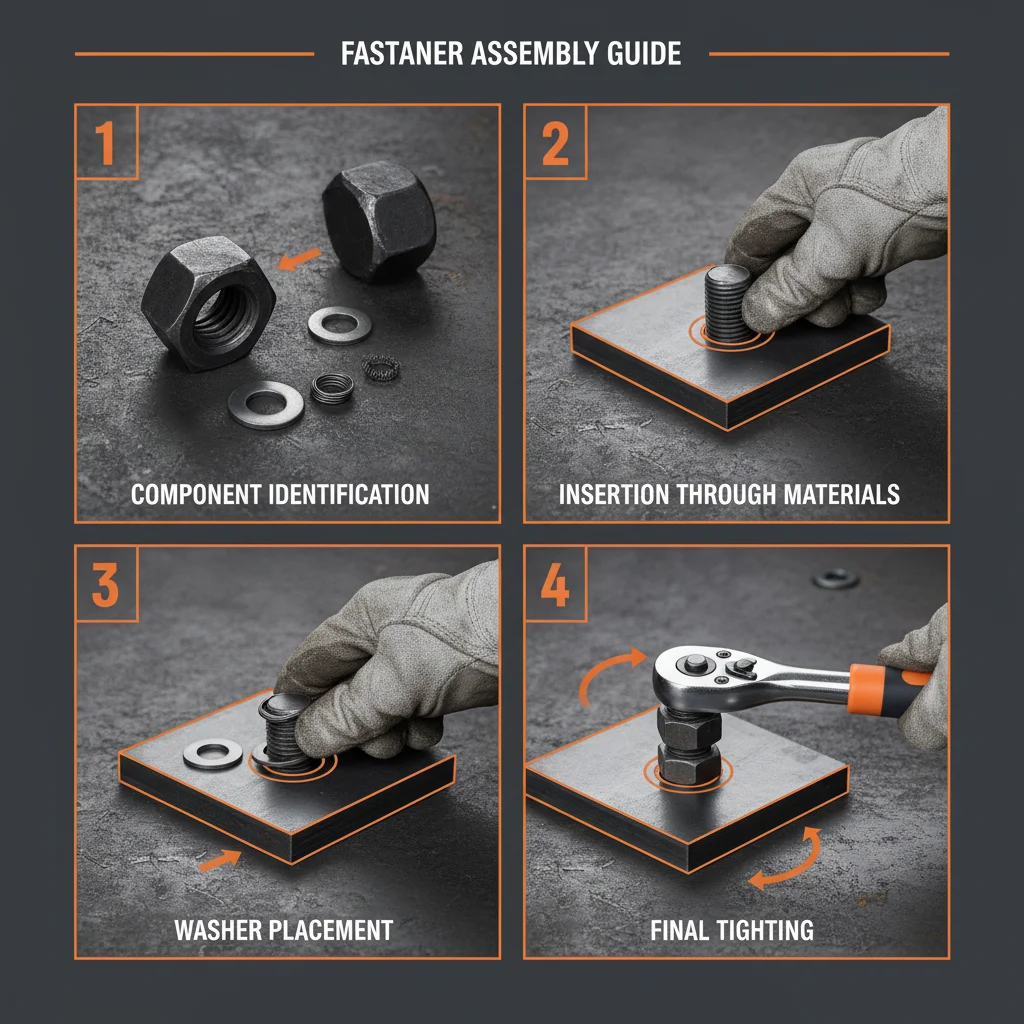
In urban infrastructure, these components are found in everything from pipe hangers and supports to complex fence accessories. By utilizing a mix of Bolt Series and Hardware Washers, engineers can create modular systems that are both easy to install and virtually maintenance-free. This versatility allows for rapid deployment in critical infrastructure projects across Asia, Europe, and North America.
Long-Term Value and Sustainability in Metal Joining
The true value of partnering with premium stainless steel fasteners manufacturers lies in the reduction of the total cost of ownership. While high-grade stainless steel may have a higher initial purchase price than zinc-plated carbon steel, the elimination of frequent replacements and corrosion-related repairs results in significant long-term savings.
Beyond financial metrics, there is a critical safety component. Fasteners are the "invisible" parts of a structure, but their failure can be catastrophic. Using certified Grade 10.9 or B7 fasteners ensures that the joint can handle peak loads during seismic events or extreme weather, providing peace of mind and ensuring public safety.
Sustainability is also improved through the use of stainless steel. Because it is 100% recyclable and possesses a lifespan that can span several decades, it reduces the need for repeated manufacturing cycles. This aligns with global "green building" initiatives that seek to minimize the carbon footprint of industrial construction.
Future Innovations in Fastener Manufacturing Technology
The industry is currently moving toward "Smart Fastening," where stainless steel fasteners manufacturers are exploring the integration of sensors within the bolt head to monitor tension in real-time. This would allow bridge operators to detect a loosening bolt before it becomes a safety hazard, shifting maintenance from a scheduled task to a predictive one.
Automation in the factory is also transforming the field. The transition to fully automated CNC cold-forming lines allows for tighter tolerances and a reduction in human error. This means that the gap between the theoretical design and the physical product is smaller than ever, enabling more daring architectural designs that push the limits of material science.
Finally, the development of new hybrid alloys is expanding the possibilities. By blending the properties of stainless steel with other rare metals, manufacturers are creating fasteners that are lighter yet stronger, which is a critical requirement for the next generation of electric vehicles and aerospace components.
Technical Comparison of Fastener Manufacturing Tiers
| Manufacturer Tier |
Standard Compliance |
Quality Control Level |
Lead Time Efficiency |
| Premium Tier |
Full ISO/ASTM/DIN |
10/10 (Full Lab) |
High (Optimized) |
| Mid-Range Tier |
Partial ISO/DIN |
7/10 (Batch Test) |
Moderate |
| Economy Tier |
Basic Internal Std |
4/10 (Visual only) |
Variable |
| Specialized Tier |
Industry Specific |
9/10 (Custom Test) |
Low (Custom) |
| OEM Tier |
Client Specification |
8/10 (Audit Based) |
Moderate |
| Generic Tier |
None/Uncertified |
2/10 (Random) |
High (Stocked) |
FAQS
The choice depends primarily on the environment. A2 stainless steel is ideal for indoor or general outdoor use where corrosion risk is low. A4 stainless steel contains molybdenum, making it significantly more resistant to chlorides and acids, which is why it is the required standard for marine environments, chemical plants, and coastal construction.
While standard stock items can ship immediately, custom orders typically require a Minimum Order Quantity (MOQ) of 1,000 pieces to justify the machine setup. Lead times vary based on the complexity of the surface treatment and the material grade, but most professional manufacturers provide a clear timeline after the sample approval phase.
Yes, reputable stainless steel fasteners manufacturers provide Mill Test Certificates (MTC) that document the chemical composition and mechanical properties of the batch. This certification ensures that the fasteners meet the specific tensile and yield strength requirements of your engineering drawings.
Most established manufacturers offer free samples to ensure that the dimensions and finish meet the client's requirements. This is a critical step in the procurement process to avoid costly errors in large-scale assembly, especially when dealing with custom tolerances or specific coatings.
Depending on the base metal, BZP (Bright Zinc Plated) and YZP (Yellow Zinc Plated) are common for carbon steel. For stainless steel, the material itself provides corrosion resistance, but additional passivation treatments can be applied to remove surface iron and enhance the protective oxide layer.
Standard industrial ranges typically span from M8 to M30. This range covers most common structural and machinery needs. For sizes outside this range, custom manufacturing is possible, provided the technical specifications and volume requirements are met.
Conclusion
The selection of high-quality components from reputable stainless steel fasteners manufacturers is more than a procurement decision; it is a commitment to safety, durability, and engineering excellence. By prioritizing material standards (ISO, DIN, ASTM), verifying grades through certification, and selecting the correct alloy for the environment, companies can ensure that their structures remain secure for decades. The synergy of precise sizing, advanced surface treatments, and rigorous quality control forms the foundation of modern industrial stability.
Looking forward, the integration of automation and smart monitoring will further elevate the industry, reducing failures and optimizing maintenance cycles. For those seeking reliable, certified, and high-performance fastening solutions, partnering with a manufacturer that offers transparency in material sourcing and quality testing is essential. We invite you to explore our full range of Bolt Series, Nuts, and Hardware Washers to find the perfect fit for your next project. Visit our website: www.topfastener.com