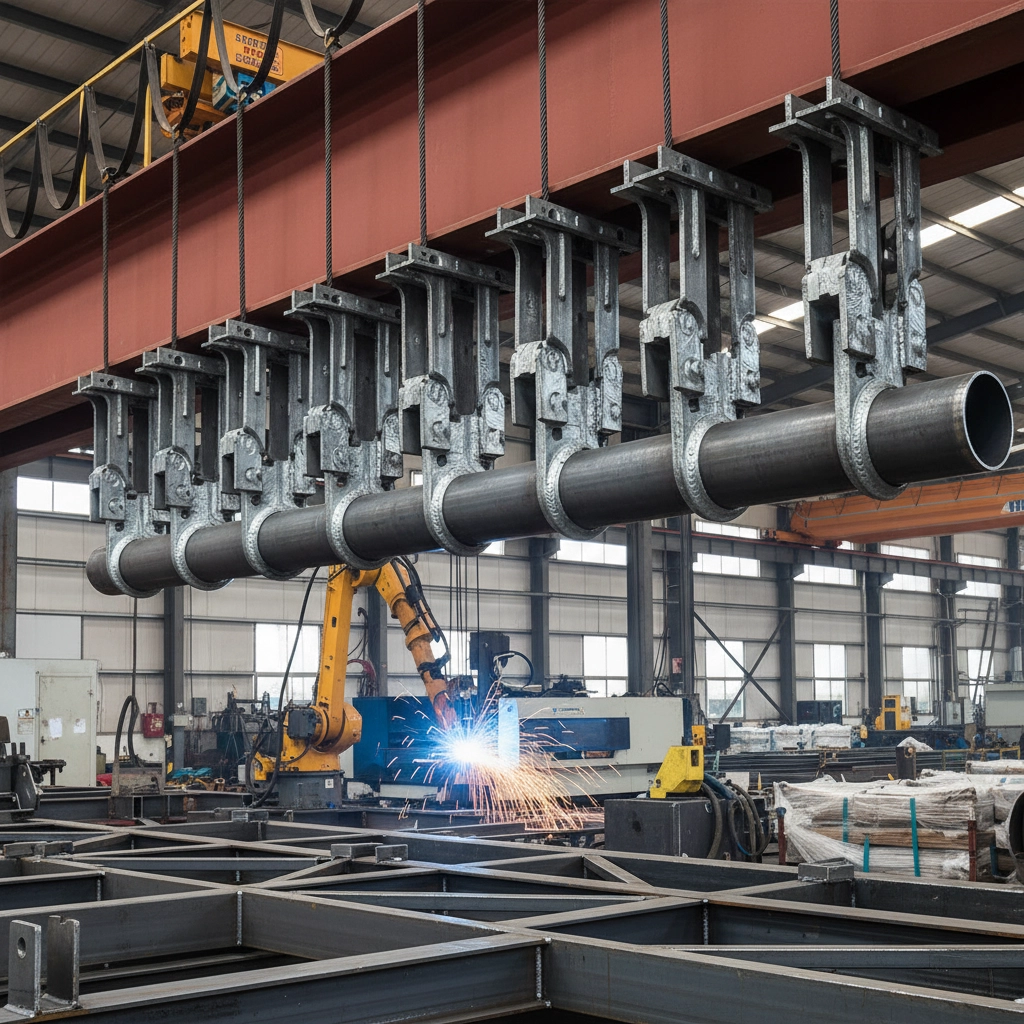
Ensuring the structural integrity of industrial piping systems requires more than just high-quality pipes; it demands a sophisticated approach to suspension and fixation. In the complex landscape of modern manufacturing, accessing a comprehensive pipe hangers and supports pdf becomes essential for engineers and procurement officers to ensure that every clamp and bracket meets stringent safety codes. Without precise support systems, pipelines are susceptible to vibration, thermal expansion, and catastrophic failure, making the selection of certified hardware a non-negotiable priority.
The global demand for heavy-duty industrial infrastructure has intensified the need for standardized fastening solutions that can withstand extreme mechanical loads. From carbon steel constructions to specialized nuclear-grade configurations, the industry has evolved to provide a vast range of sizes, typically spanning from 1/2" to 30", to accommodate diverse operational needs. Understanding the technical specifications found in a pipe hangers and supports pdf allows companies to optimize their installation workflows and reduce long-term maintenance costs.
Ultimately, the goal of any piping support system is to provide stability while allowing for the natural movement of the medium within the pipe. By adhering to international standards such as ANSI/MSS and federal specifications, manufacturers can guarantee that their systems are not only functional but also compliant with global safety regulations. This guide explores the critical dimensions, material choices, and engineering advantages of professional-grade pipe clamps, providing a roadmap for secure and durable industrial pipeline fixation.

Global Relevance of Industrial Pipe Support Systems
In the global industrial sector, the stability of pipeline networks is paramount to the safety of workers and the environment. According to ISO and ANSI standards, the failure of a single support bracket in a high-pressure system can lead to cascading failures. This is why professionals rely on a detailed pipe hangers and supports pdf to determine the exact load-bearing requirements for their specific installation, ensuring that carbon steel clamps are correctly matched to pipe diameters ranging from 1/2" to 30".
The challenge often lies in balancing structural rigidity with thermal flexibility. In high-heat environments, pipes expand and contract; if the support system is too rigid or uses inferior materials, the pipeline can warp or burst. By utilizing premium carbon steel with finishes like hot-dip galvanization, industries can mitigate these risks, ensuring that the infrastructure remains operational even under the most demanding thermal and mechanical stresses.
Defining the Standard Pipe Clamp Framework
A Standard Pipe Clamp is a specialized industrial fastening tool engineered specifically for the secure suspension and fixation of pipeline systems. Unlike generic clamps, these are high-performance solutions designed to act as critical connectors for both cold and hot pipelines that do not require insulation. They provide the necessary interface between the piping and the building structure, often integrating with weldless eye nuts or rods to create a stable overhead suspension.
From a technical perspective, these clamps are defined by their adherence to strict federal and industry specifications, such as A-A-1192A (Type 4) and WW-H-171-E (Type 4). This standardization ensures that regardless of where the component is manufactured, it will fit precisely and perform predictably. The inclusion of an "equal gap" design is a hallmark of precision engineering, allowing for consistent performance and effortless integration into larger suspension arrays.
In modern industry, this framework is not just about holding a pipe in place; it is about risk management. By specifying materials like high-strength carbon steel and verifying certifications from UL, ULC, and FM, engineers can ensure that their systems are legally compliant and operationally safe. This level of detail is typically documented in a comprehensive pipe hangers and supports pdf, serving as the primary reference for installation teams globally.
Core Components of High-Performance Clamping
The effectiveness of a support system begins with material integrity. High-strength carbon steel serves as the foundation, providing the mechanical rigidity required to prevent pipe displacement. When reviewing a pipe hangers and supports pdf, the first thing an engineer looks for is the body material and the hardware composition—typically zinc-plated bolts and nuts—to ensure the assembly doesn't fail at the connection point.
Thermal resilience is the second core component. For extreme environments, a plain finish is utilized to withstand temperatures up to 750°F (399°C). Conversely, for areas prone to moisture and chemical exposure, hot-dip galvanized finishes are employed. While the galvanized option has a lower thermal limit of 450°F (232°C), its superior corrosion resistance makes it indispensable for outdoor or humid industrial zones.
Finally, the geometric precision of the clamp, specifically the "C" gap dimension, is critical. This gap provides the necessary clearance at the top attachment point for weldless eye nuts or eye rods, ensuring a proper fit without interference. This meticulous attention to detail ensures that the clamp maintains a secure grip without compromising the pipe's surface, a key specification often highlighted in any professional pipe hangers and supports pdf.
Technical Performance and Load Capacity
When analyzing the performance of pipe supports, the primary metric is the stability under mechanical load. Our premium clamps are engineered to minimize displacement, providing a far more secure grip than generic alternatives. This is achieved through a refined structural design that distributes pressure evenly around the pipe circumference, reducing the risk of deformation while maximizing the load-bearing capacity of the suspension system.
Beyond simple weight-bearing, the interaction between finish and environment determines the lifecycle of the product. While plain carbon steel excels in heat, galvanized steel excels in longevity. This performance delta is crucial when calculating the Total Cost of Ownership (TCO) for a plant's infrastructure, as it dictates the frequency of maintenance and replacement cycles.
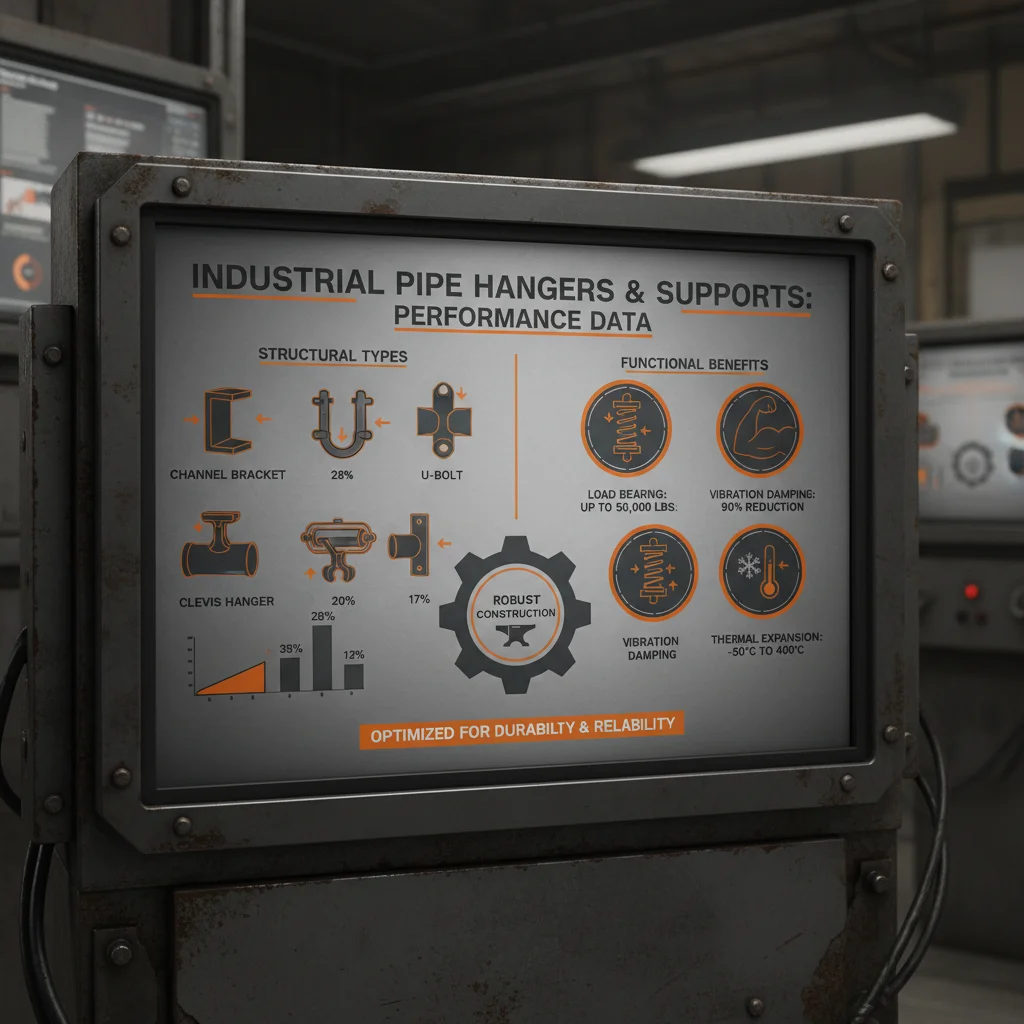
Performance Comparison of Pipe Hangers and Supports PDF Systems
Global Applications and Industry Use Cases
The versatility of these clamps makes them essential across a spectrum of global industries. In petrochemical plants across the Middle East and North America, the high-temperature plain finish clamps are used to support steam lines that operate at extreme thermal levels. In these settings, the ability to withstand up to 750°F is not just a feature—it is a safety requirement to prevent the collapse of critical utility lines.
Furthermore, the availability of custom nuclear-grade versions allows for application in the most sensitive environments on earth. Nuclear power plants require an unprecedented level of quality verification and material traceability. By following the strict guidelines found in a pipe hangers and supports pdf, engineers can specify components that meet the rigorous safety audits required for nuclear facility certification.
Long-Term Value and Reliability Benefits
Investing in premium pipe clamps provides tangible long-term value through the reduction of lifecycle costs. While generic fasteners may offer a lower initial price, they often lack the certifications (UL, ULC, FM) and material consistency required for industrial longevity. A system based on high-strength carbon steel and zinc-plated hardware significantly extends the service lifespan, reducing the need for frequent inspections and costly emergency replacements.
Beyond the financial aspect, the emotional value of "peace of mind" cannot be overstated. In high-stakes industrial environments, knowing that your pipeline is secured by ANSI/MSS SP-69 compliant hardware ensures that the facility operates without the looming threat of structural failure. This reliability builds trust between the contractor, the plant owner, and the safety inspectors.
Moreover, the efficiency of installation is greatly enhanced by the equal gap design. Rapid installation reduces labor hours and minimizes downtime during plant upgrades. When the right components are selected from a pipe hangers and supports pdf, the integration process becomes seamless, ensuring that the project stays on schedule and within budget.
Future Innovations in Pipe Suspension Technology
The future of pipe support is leaning heavily toward digital integration and "smart" materials. We are seeing a trend where digital twins of industrial plants are used to simulate stress loads before a single clamp is installed. This allows engineers to use a pipe hangers and supports pdf to precisely map out the required size and finish for every single node in a 3D model, eliminating waste and over-engineering.
Sustainability is also driving innovation. There is an increasing shift toward more eco-friendly galvanization processes that reduce chemical runoff while maintaining the same level of corrosion resistance. As green energy transitions take hold, the demand for supports that can handle hydrogen pipelines—which have different thermal and chemical properties than traditional oil and gas—is creating a new frontier for carbon steel alloy development.
Lastly, automation in custom fabrication is making nuclear-grade and non-standard dimensions more accessible. Advanced CNC machining ensures that the "C" gap and other critical tolerances are held to micron-level precision, further increasing the safety margins of industrial infrastructure worldwide.
Technical Specification and Comparison Matrix for Pipe Supports
|
Finish Type
|
Max Temp Limit
|
Corrosion Resistance
|
Primary Use Case
|
| Plain Carbon Steel |
750°F |
Low |
High-Heat Steam Lines |
| Hot-Dip Galvanized |
450°F |
Very High |
Outdoor/Humid Areas |
| Zinc-Plated Hardware |
Moderate |
Medium |
Standard Connection Points |
| Nuclear-Grade Custom |
Variable |
High |
Nuclear Power Facilities |
| Standard (UL/FM) |
Moderate |
Medium |
Commercial Infrastructure |
| Special Alloy Custom |
Extreme |
Extreme |
Chemical Processing Plants |
FAQS
For environments reaching temperatures up to 750°F (399°C), the Plain finish is highly recommended. While the Hot-dip galvanized finish provides superior corrosion resistance, it has a significantly lower temperature limit of 450°F (232°C). Choosing the correct finish prevents material degradation and ensures the clamp maintains its structural integrity under thermal stress.
Yes, our standard pipe clamps are specifically engineered for use with Fig. 290 weldless eye nuts or eye rods. The "C" gap design is specifically included to provide the necessary clearance at the top attachment point, ensuring a seamless and secure suspension assembly without any interference between the clamp body and the rod attachment.
Our clamps comply with Federal Specifications A-A-1192A and WW-H-171-E, and Industry Standards ANSI/MSS SP-69 and SP-58. Furthermore, for sizes ranging from 3/4" to 8", our products are UL listed, ULC listed, and FM approved, ensuring they meet the highest global safety and quality assurance benchmarks for critical infrastructure.
Absolutely. Nuclear-grade versions are available via custom order. These specialized clamps are manufactured to meet the stringent safety, material traceability, and quality requirements of nuclear facilities, ensuring they can operate safely in high-risk environments where failure is not an option.
The "C" gap is a precision-engineered clearance at the top of the clamp. Its purpose is to allow the installation of rod attachments or weldless eye nuts without the hardware hitting the clamp's main body. This ensures the pipe is held firmly while the suspension rod remains perfectly vertical and secure.
To ensure you receive the exact part for your system, please specify: 1) The pipe size (from 1/2" to 30"), 2) The figure number, 3) The product name, and 4) Your preferred finish (Plain or Hot-dip galvanized). This prevents installation errors and ensures your project remains compliant with the specifications in your pipe hangers and supports pdf.
Conclusion
Selecting the right pipe support system is a critical decision that impacts the safety, longevity, and efficiency of any industrial facility. By prioritizing high-strength carbon steel materials and adhering to ANSI/MSS standards, companies can ensure their pipeline infrastructure is resilient against both mechanical loads and extreme thermal stress. From the precision of the equal gap design to the reliability of UL/FM certifications, every detail in a professional pipe hangers and supports pdf serves to mitigate risk and optimize operational performance.
Looking forward, the integration of digital planning and sustainable manufacturing will continue to elevate the standards of pipeline fixation. We encourage engineers and procurement managers to move beyond generic fasteners and invest in certified, high-performance clamping solutions that offer a lower total lifecycle cost. For more detailed technical specifications and to secure your infrastructure with the best in the industry, visit our website: www.topfastener.com.