Ensuring the structural integrity of piping systems requires a meticulous approach to plumbing hanger spacing, a critical factor that prevents sagging, reduces vibration, and ensures long-term operational safety. When hangers are placed at optimized intervals, they distribute the weight of the pipes and the fluids they carry evenly, preventing localized stress points that could lead to catastrophic joint failure or pipe deformation.
Across the global construction and manufacturing sectors, the adherence to precise spacing standards is not merely a suggestion but a safety mandate. Whether in high-rise commercial buildings or heavy industrial plants, the correct application of support systems ensures that piping networks can withstand thermal expansion and seismic shifts, thereby reducing maintenance costs and extending the lifecycle of the entire infrastructure.
Understanding the nuances of plumbing hanger spacing involves balancing material strengths—such as the use of carbon steel and specialized slide plates—with the specific environmental demands of the installation. By integrating high-quality supports with calculated spacing, engineers can guarantee a stable, leak-free system that meets rigorous international safety and building codes.

Global Standards for Plumbing Hanger Spacing
On a global scale, the regulation of plumbing hanger spacing is governed by strict ISO and national building codes to mitigate the risk of structural collapse. In high-density urban environments, where piping systems are complex and layered, improper spacing can lead to harmonic vibrations that jeopardize the integrity of the surrounding architecture.
The challenge lies in adapting these standards to diverse climates and materials. For instance, in regions prone to extreme temperature fluctuations, the spacing must account for the expansion and contraction of carbon steel pipes, necessitating the use of specialized slide plates to allow movement without compromising the support's hold.
Engineering Definitions of Hanger Spacing
In professional engineering terms, plumbing hanger spacing refers to the precise linear distance between two consecutive support points along a pipe run. This distance is calculated based on the maximum allowable deflection of the pipe material, ensuring that the pipe does not bend beyond its elastic limit under the weight of the fluid and the pipe itself.
This concept is intrinsically linked to the "allowable load" capacity of the hanger. For our carbon steel supports, the allowable vertical load is a variable that depends heavily on the pipe's internal pressure and wall thickness; therefore, the spacing must be adjusted to ensure no single hanger is overloaded beyond its rated capacity.
Beyond simple weight distribution, spacing is a tool for vibration control. By strategically placing supports, engineers can shift the natural frequency of the piping system, preventing resonance that could otherwise lead to fatigue cracks in the metal or leaks at the joints.
Core Components Affecting Support Stability
The efficacy of plumbing hanger spacing is only as reliable as the components used. Carbon steel serves as the primary structural material, providing the necessary rigidity to maintain spacing over long durations without deformation.
A critical element in maintaining stability is the slide plate material. Depending on the application, options such as PTFE, 25% glass filled, or graphite are used. Graphite slide plates, which are typically bonded, are essential for high-temperature services (above 500°F), where bolted construction is specified to ensure the spacing remains constant despite extreme heat.
Furthermore, the finish of the hanger—whether painted or hot-dipped galvanized—protects the component from corrosion. Corrosion can thin the metal of the support, effectively reducing its load capacity and making the original plumbing hanger spacing insufficient over time.
Critical Factors in Determining Spacing Intervals
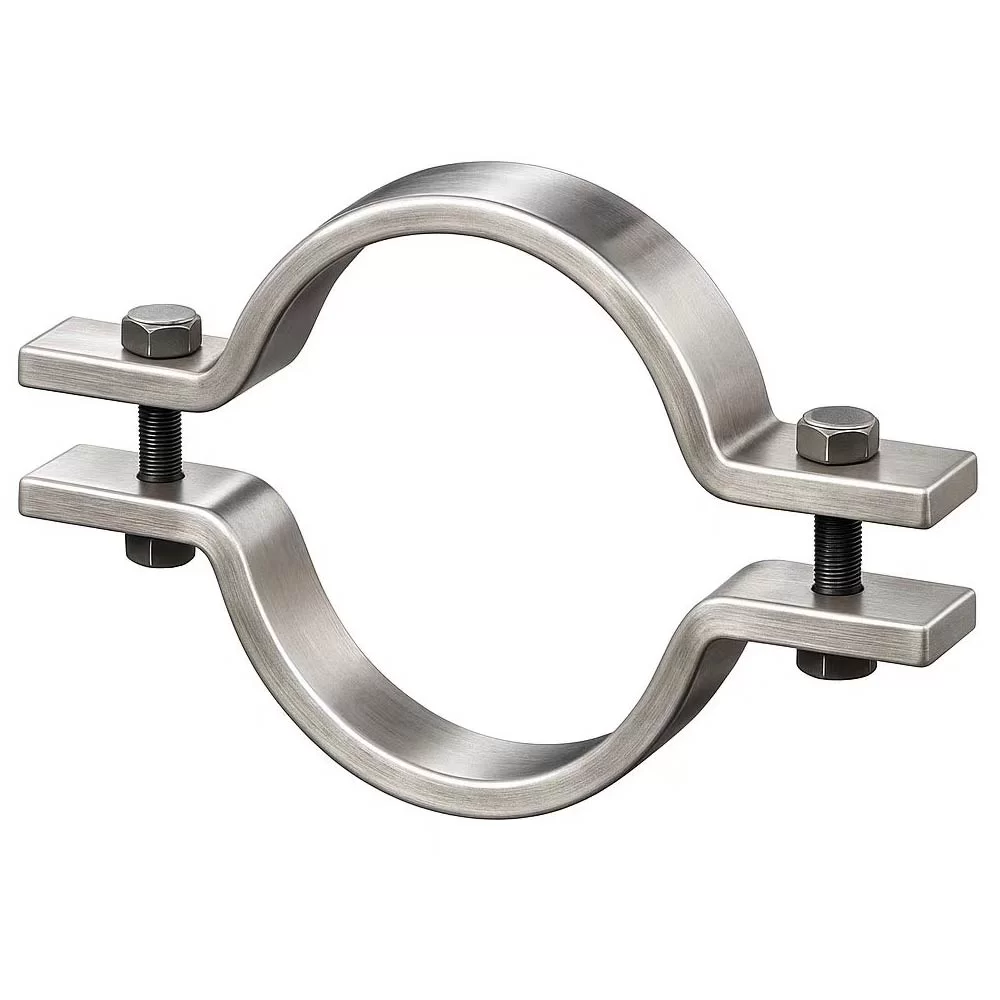
Calculating the ideal plumbing hanger spacing requires an analysis of several technical variables. First, the pipe size is paramount; for pipes 3" and above, end plates are provided to provide additional stability at the termination points. Second, the wall thickness of the pipe determines its stiffness, directly impacting how far apart supports can be placed.
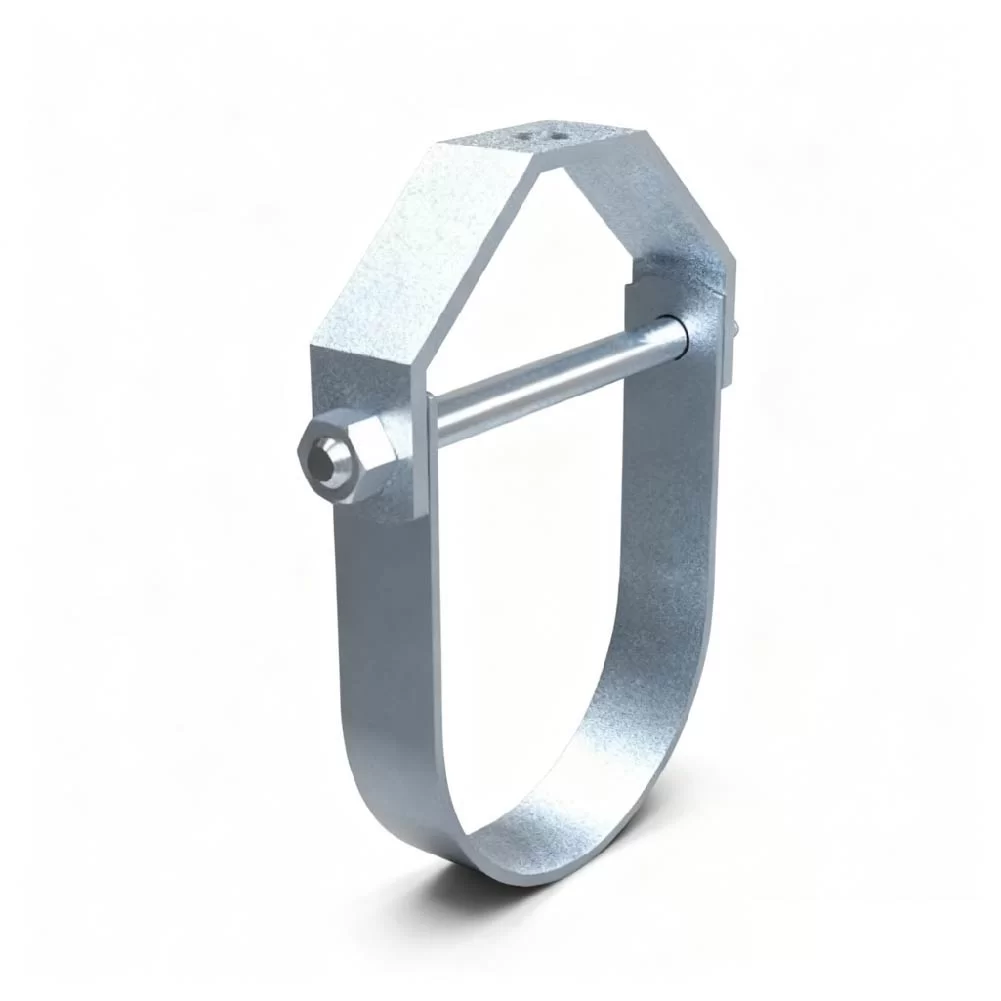
Additionally, the environment dictates the modification of dimensions A, B, C, and D of the hanger. By adjusting these dimensions, engineers can optimize the center of gravity and the load-bearing axis, ensuring that the spacing intervals are mathematically aligned with the physical stresses of the system.
Impact of Material Choice on Plumbing Hanger Spacing Efficiency
Industrial Applications and Global Use Cases
In heavy industrial zones, such as petrochemical plants or power stations, plumbing hanger spacing must account for high-pressure steam and volatile liquids. In these settings, the use of graphite slide plates and bolted construction is non-negotiable to prevent support failure under extreme thermal loads.
Conversely, in large-scale commercial developments, the focus shifts toward cost-efficiency and rapid installation. Here, painted carbon steel hangers with standard spacing are used to support HVAC and potable water lines, ensuring that the building's internal plumbing remains silent and secure throughout its operational life.
Long-term Value of Optimized Support Systems
Investing in the correct plumbing hanger spacing provides immense long-term value by virtually eliminating the risk of pipe sagging. Sagging leads to "low spots" in the piping where sediment and condensate collect, which can trigger internal corrosion and eventually cause leaks that are expensive to repair.
From a sustainability perspective, optimized spacing reduces the total amount of material required while maximizing the lifespan of the installation. By using hot-dipped galvanized finishes, the supports resist environmental degradation, ensuring that the spacing remains structurally sound for decades without needing replacement.
Ultimately, the reliability of the support system builds trust with stakeholders and end-users. Knowing that a piping network is engineered with precise spacing and high-grade materials provides peace of mind, ensuring that safety is never compromised by technical oversight.
Future Innovations in Pipe Support Technology
The future of plumbing hanger spacing is moving toward "smart" supports. We are seeing the integration of sensors within slide plates that can monitor real-time load and thermal expansion, alerting facility managers if a support is nearing its allowable load limit.
Moreover, the development of new composite materials for slide plates is expanding the temperature range that carbon steel supports can handle. This allows for even more flexible spacing options in specialized industries like aerospace and cryogenic processing, where traditional materials would fail.
Digital transformation is also playing a role through BIM (Building Information Modeling). Engineers can now simulate the effects of various plumbing hanger spacing configurations in a virtual environment, optimizing the placement of every single hanger before a single bolt is tightened on-site.
Analysis of Support Configurations for Optimized Spacing
| Support Material |
Slide Plate Type |
Thermal Limit |
Spacing Stability |
| Carbon Steel |
PTFE |
Moderate |
High |
| Carbon Steel |
Graphite (Bonded) |
Very High |
Very High |
| Galvanized Steel |
Glass Filled |
Moderate |
Medium |
| Carbon Steel |
Graphite (Bolted) |
Extreme (>500°F) |
Maximum |
| Painted Steel |
Standard Steel |
Low |
Medium |
| Galvanized Steel |
PTFE |
Moderate |
High |
FAQS
Wall thickness determines the rigidity of the pipe. A thicker wall increases the pipe's resistance to bending, which typically allows for wider plumbing hanger spacing. Conversely, thin-walled pipes are more prone to sagging and require supports to be placed closer together to maintain a straight run.
Bolted construction is strictly recommended for high-temperature services exceeding 500°F. At these temperatures, bonding agents in graphite slide plates can degrade, whereas bolted construction ensures the slide plate remains securely in place, maintaining the stability of the hanger spacing.
End plates are provided for pipe sizes 3" and above to provide additional structural reinforcement at the ends of a pipe run. This prevents the pipes from shifting laterally and ensures that the calculated plumbing hanger spacing is maintained even under heavy dynamic loads.
Yes, the allowable vertical load is directly dependent on both the internal pipe pressure and the wall thickness. Higher internal pressures can increase the overall stress on the pipe, necessitating more frequent support intervals to prevent failure.
PTFE (Polytetrafluoroethylene) is widely regarded as the best material for reducing friction. It allows the pipe to slide smoothly during thermal expansion, which prevents the supports from being pulled out of alignment and keeps the plumbing hanger spacing consistent.
Hot-dipped galvanizing provides a metallurgical bond with the carbon steel, offering superior corrosion resistance compared to paint. This ensures the hanger's structural integrity is preserved, preventing a decrease in load capacity that would compromise the spacing intervals.
Conclusion
Mastering the complexities of plumbing hanger spacing is fundamental to the creation of safe, durable, and efficient piping systems. By carefully considering the interplay between carbon steel strength, slide plate materials like graphite or PTFE, and the specific allowable loads of the pipe, engineers can eliminate the risks of sagging and structural fatigue. The integration of standardized components and precise calculations ensures that infrastructure can withstand the test of time and environmental stress.
Looking forward, the industry is poised for a transition toward more intelligent and sustainable support systems. As BIM technology and smart sensors become standard, the ability to dynamically monitor and adjust support intervals will further enhance safety. We encourage all professionals to prioritize high-quality materials and rigorous spacing standards to ensure the longevity of their projects. Visit our website for more professional solutions: www.topfastener.com