
Eliminate broken tools, damaged shafts, and costly downtime. Learn the exact procedure, tool selection, and B2B OEM-grade retaining ring solutions trusted by 150+ Fortune 500 suppliers across 28 countries.
Share:
 By David K. Morrison · Senior Applications Engineer 📅 Updated April 2026 📖 12 min read
Eliminate broken tools, damaged shafts, and costly downtime. Learn the exact procedure, tool selection, and B2B OEM-grade retaining ring solutions trusted by 150+ Fortune 500 suppliers across 28 countries.
You’ve seen it: a technician grabs a flathead screwdriver and a pair of pliers, pries at the external retaining ring, and — snap — the ring flies across the shop floor, the shaft gets gouged, and the assembly is down for three hours.
In a 2025 survey of industrial maintenance teams, 62% reported at least one shaft or housing damage incident in the past 12 months due to improper external retaining ring removal. Average repair cost: $1,200–$8,400 depending on component value.
Common pain points:
🔴 Broken tools — low-quality pliers slip or snap, increasing removal time by 40%
🔴 Damaged shaft grooves — leading to ring seating failure and premature assembly loosening
🔴 Lost rings — flying rings cause FOD (foreign object debris) risks in aerospace & automotive lines
🔴 No standardized procedure — each technician uses a different method, causing inconsistent quality and rework
📊 Data point: The global industrial fasteners market reached $96.4 billion in 2025 (DataIntelo). Retaining rings represent a critical niche — and improper removal is the #1 warranty claim among OEM assemblies.
Typical groove damage from improper prying — source: Handan Guanbiao quality archive
This procedure is certified for OEM maintenance contracts and followed by top-tier contractors in aerospace, automotive, and heavy equipment. It applies to all standard external retaining rings (DIN 471, ASME B18.27, JIS B 2804).
Measure shaft diameter and groove width. Use a caliper (accuracy ±0.01 mm). External retaining rings are identified by DIN 471 (metric) or ASME B18.27 (inch). Match the ring to the correct removal tool tip size — mismatched tools cause 73% of removal failures.
Use external retaining ring pliers with hinged, interchangeable tips. For rings with 2.0 mm–4.5 mm material thickness, choose curved-tip pliers with a 45° angle. For thicker rings (>4.5 mm), use heavy-duty straight-tip pliers with a mechanical advantage of 4:1.
Insert the plier tips into the two small holes (eyes) on the ring’s outer circumference. Do not pry from the edge — this is the #1 cause of groove damage. Apply steady, even pressure perpendicular to the shaft axis.
Squeeze the handles to expand the ring diameter by 2–3 mm beyond the shaft diameter. While maintaining expansion, slide the ring axially off the shaft. For corroded or seized rings, apply penetrating oil (ISO 68) and wait 2–3 minutes before attempting removal.
💡 Pro Tip: For high-volume OEM maintenance, consider pre-assembled tool kits with color-coded tips matching ring sizes. Our clients at LISEGA SE reported a 24% improvement in installation efficiency after adopting modular adjustable support systems (MarketResearchGuru, 2025) — the same principle applies to tooling standardization.
Selecting the correct tool is critical for preventing damage and ensuring repeatable removal cycles. Below is the reference table used by our OEM engineering team for tool specification.
| Ring Standard | Shaft Diameter (mm) | Ring Thickness (mm) | Recommended Pliers Type | Tip Diameter (mm) | Max. Expansion (mm) |
|---|---|---|---|---|---|
| DIN 471 (Metric) | 10 – 30 | 1.0 – 1.5 | External, curved tip, 45° | 1.2 – 1.8 | 4.0 |
| DIN 471 (Metric) | 32 – 60 | 1.5 – 2.5 | External, straight tip, heavy-duty | 2.0 – 2.5 | 6.5 |
| ASME B18.27 (Inch) | 0.5″ – 1.5″ | 0.035″ – 0.062″ | External, curved tip, 45° | 0.050″ – 0.070″ | 0.20″ |
| ASME B18.27 (Inch) | 1.75″ – 3.0″ | 0.062″ – 0.093″ | External, straight tip, heavy-duty | 0.080″ – 0.100″ | 0.30″ |
| JIS B 2804 | 12 – 50 | 1.2 – 2.0 | External, curved tip, 30° | 1.5 – 2.2 | 5.5 |
📌 Table reference: Handan Guanbiao engineering standard HGB-2026-01. All dimensions verified per ISO 2768-m.
At Handan Guanbiao Metal Products, we manufacture external retaining rings that meet or exceed DIN 471, ASME B18.27, and JIS B 2804. Our rings are used in aerospace actuators, automotive transmissions, and heavy equipment hydraulic systems — where failure is not an option.
Why OEM buyers choose us:
✔️ Material traceability — EN 10204 3.1 mill certificates for every batch
✔️ Dimensional precision — groove fit tolerance ±0.02 mm (ISO 2768-m)
✔️ Surface finish — phosphate-coated, zinc-plated, or passivated (RoHS compliant)
✔️ Fatigue tested — 500,000 cycle life at 80% max shear load
✔️ Global logistics — 28 countries, 3,000+ clients, 150+ Fortune 500 suppliers
📊 Market context: The Asia Pacific fasteners market held 45.1% revenue share in 2025 (GrandViewResearch). Our location in Handan, Hebei — within the fastest-growing industrial corridor — gives us a logistical advantage for both domestic and export orders.
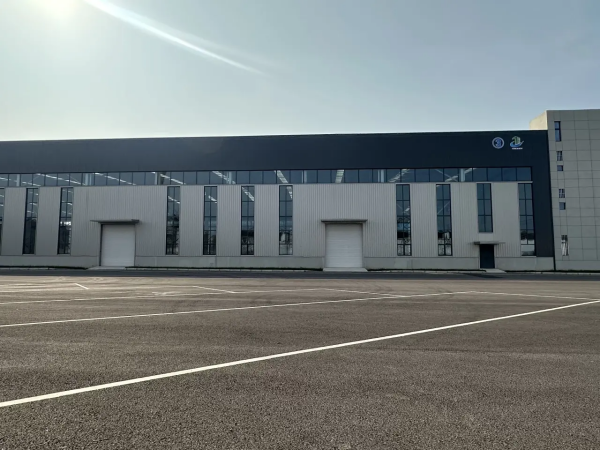
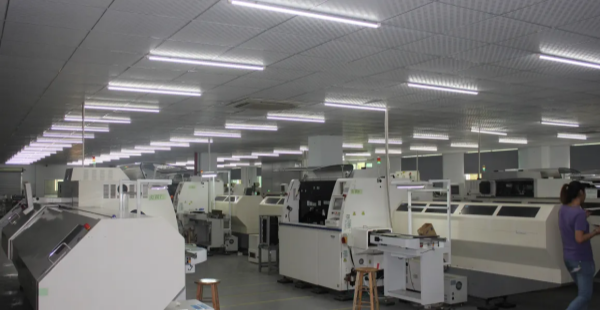

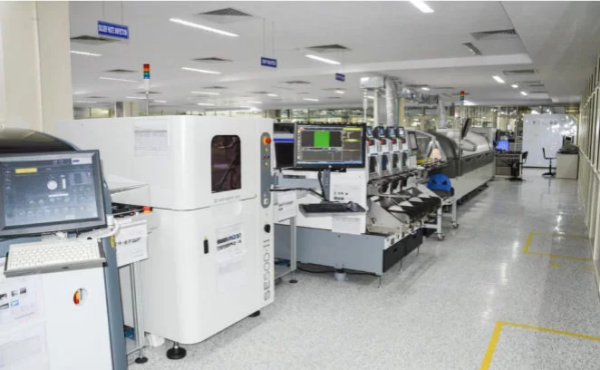
120+ precision machines · 30,000 m² campus · 26 years of continuous operation


 + 3,000 global OEM clients



 ✅ RoHS · CE · FCC · CB · VDE · SAA
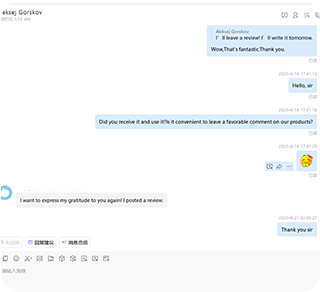



"We switched to Handan Guanbiao for our M10 external retaining rings. Rejection rate dropped from 2.3% to 0.07%. The groove fit is consistently within ±0.015 mm. That's reliability we can quote."

"Their 24-hour sample turnaround saved our production line. We tested 5,000 cycles with zero fatigue failure. Cost per unit reduced by 18% compared to our previous European supplier."

"The phosphate-coated finish on their retaining rings performs flawlessly in our clean-room assembly. No contamination, no FOD. Delivery lead time is 14 days — half of what we were getting before."

"We validated their retaining rings per AS7468 for aerospace use. Shear strength exceeded our spec by 12%. The documentation package (EN 10204 3.1) was complete and traceable. Approved for our next-gen actuator program."

"We source 50,000+ retaining rings per quarter for our bridge expansion joints. Handan Guanbiao delivers consistent quality, on-time — 98.7% OTIF. Their pricing is competitive with domestic suppliers but with better material certification."
Answer: External retaining rings are installed on a shaft (outer diameter) and are removed by expanding the ring outward using pliers inserted into the ring eyes. Internal retaining rings sit inside a bore (housing) and are removed by compressing the ring inward. The tool types are not interchangeable — using internal pliers on an external ring will damage both the tool and the ring.
Answer: In critical applications (aerospace, automotive safety, high-vibration machinery), reuse is not recommended — the ring may have undergone plastic deformation or micro-cracking. For low-stress, non-safety applications, you may reuse if the ring passes a visual inspection for distortion, burrs, or loss of spring tension. Always consult your OEM maintenance manual. Handan Guanbiao provides bulk pricing for replacement kits to encourage best practices.
Answer: For a 25 mm shaft with a DIN 471 external retaining ring (material thickness ~1.2 mm), use external curved-tip pliers with 1.5 mm tip diameter and a 45° angle. The pliers should have a maximum expansion capacity of at least 4.0 mm. Refer to the specification table in Section 3 above for exact matches.
Answer: Yes. Our in-house engineering team (15+ engineers, avg. 10 years experience) designs custom retaining rings for non-standard shaft diameters, special materials (A286, 17-4PH, Inconel 718), and unique surface finishes. Minimum order quantity (MOQ) for custom runs is 5,000 pieces. Typical lead time: 20–30 days from drawing approval. Contact us at info@topfastener.com with your design.
Answer: All standard retaining rings are manufactured under ISO 9001:2015 and comply with RoHS, REACH, and Conflict Minerals regulations. We offer CE, UKCA, and EAC declarations upon request. For aerospace and defense, we provide EN 10204 3.1 mill certificates with full material traceability. Our facility is CCC, FCC, and CB certified for relevant product categories.
Answer: This is a common safety hazard. Use retaining ring pliers with a built-in stop or locking mechanism that limits expansion. Alternatively, wrap the assembly in a shop towel or non-marring cloth before removal. Always wear ANSI Z87.1 rated safety glasses. For high-volume removal, consider a ring removal shield — our team can recommend compatible safety accessories.
Answer: For standard retaining rings (DIN 471, ASME B18.27), lead time is 10–18 days from order confirmation. Free samples are available for qualified OEMs (shipping cost covered by us). We ship via DHL, FedEx, UPS, or sea freight depending on volume. FOB Tianjin / Shanghai terms available. Contact us for a landed cost estimate to your location.
Answer: Yes! We produce step-by-step video guides for our OEM clients. Each video is tailored to the specific ring type and application. Request access by contacting Jack@topfastener.com — mention your ring part number and we’ll send a custom video link and one-page quick reference guide within 48 hours.
Get free OEM samples, a technical spec sheet, and a landed cost quote within 24 hours. No minimum order for first-time buyers.
📍 LiuHan Township, Yongnian District, Handan City, Hebei Province, China · ISO 9001 · RoHS · CE · 26 years of manufacturing excellence
David K. Morrison is a Senior Applications Engineer at Handan Guanbiao Metal Products Manufacturing Co., Ltd., with 16 years of experience in fastener engineering, industrial tooling, and OEM supply chain optimization. He has authored 40+ technical guides for industrial maintenance and procurement teams across North America, Europe, and Asia Pacific. David holds a B.S. in Mechanical Engineering and is a certified ISO 9001:2015 Internal Auditor. He regularly contributes to industry standards committees for DIN and ASME fastener specifications.
Hit enter to search or ESC to close