In the complex world of industrial piping systems, ensuring structural stability and thermal expansion management is critical for safety and longevity. One of the most effective solutions for achieving this is the implementation of specialized support systems, specifically focusing on various pipe shoe support types designed to elevate the pipe above the supporting structure. By providing a consistent gap, these supports protect the pipe's insulation and prevent direct contact that could lead to corrosion or mechanical failure.
Globally, the demand for high-precision fastening and support components has surged as petrochemical plants, power stations, and pharmaceutical facilities expand. The challenge lies in selecting the correct material and grade—ranging from carbon steel Q235 to high-strength stainless steel A4—to withstand extreme pressures and environmental stressors. Without the correct support configuration, piping systems are prone to sagging, vibration-induced fatigue, and catastrophic leaks.
Understanding the diverse pipe shoe support types allows engineers to optimize the balance between load-bearing capacity and thermal flexibility. By integrating industry standards such as ISO, DIN, and ASME, manufacturers ensure that every component, from the M8 to M72 size range, meets rigorous safety benchmarks. This guide explores the technical nuances and practical applications of these essential industrial components.

Global Relevance of Pipe Shoe Support Types
The global industrial landscape relies heavily on the seamless transport of fluids and gases. In high-temperature environments, such as those governed by ASME and ISO standards, the thermal expansion of metal pipes can cause significant displacement. The use of specific pipe shoe support types is essential to ensure that these pipes can move safely without compromising the integrity of the supporting steelwork.
From the massive refineries in the Middle East to the precise pharmaceutical labs in Europe, the ability to stabilize heavy-duty piping is a non-negotiable safety requirement. By utilizing a variety of materials—including carbon steel Q235 and stainless steel A2/A4—engineers can tailor the support system to the specific chemical and thermal properties of the installation environment.
Defining the Technical Scope of Pipe Shoes
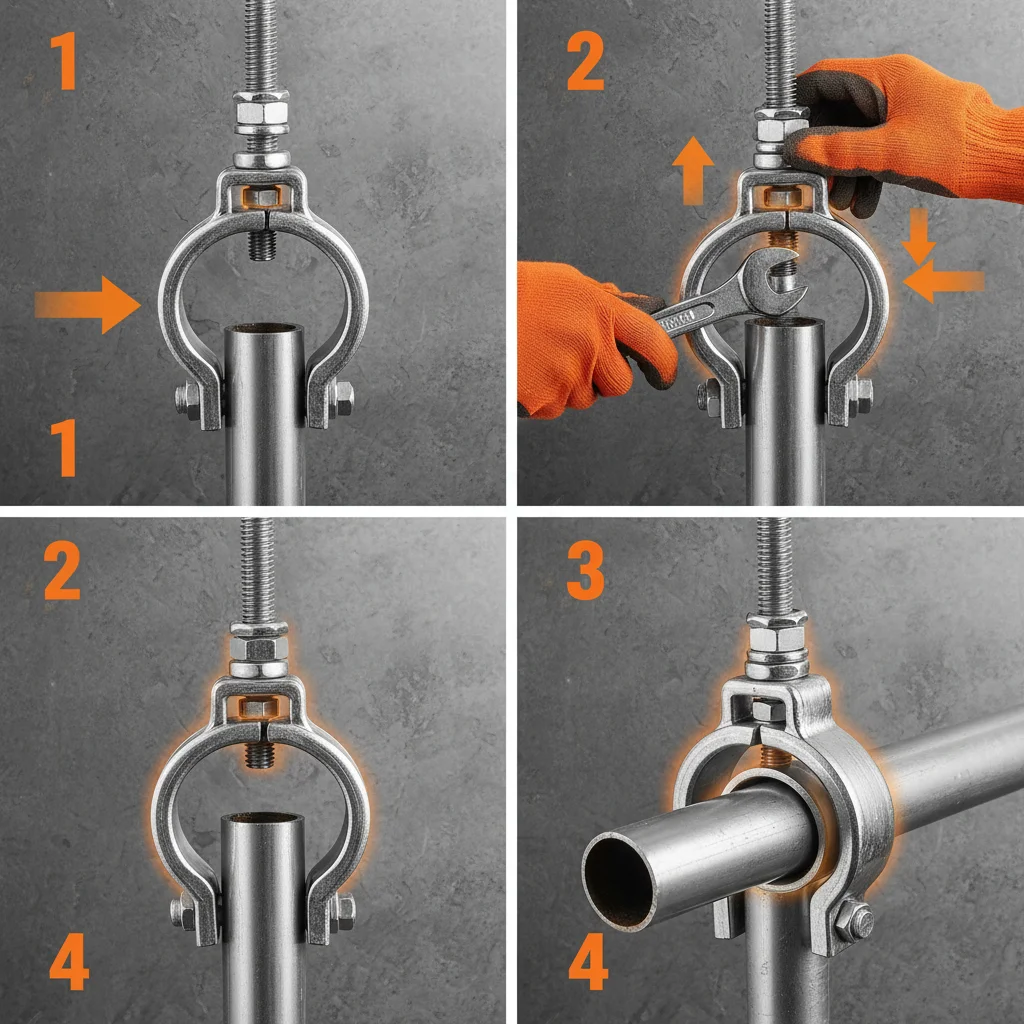
In technical terms, pipe shoes are structural components welded or clamped to the bottom of a pipe to elevate it from its support beam. This elevation is critical because it allows for the installation of thermal insulation between the pipe and the support, preventing "cold bridging" and reducing energy loss. The variety of pipe shoe support types typically ranges from simple welded shoes to complex adjustable clamps.
Modern industrial needs demand that these supports be compatible with various standards, including DIN, BS, and JIS. Whether the application requires a simple load-bearing shoe or a sliding support for thermal movement, the precision of the dimensions (from M8 to M72) ensures a perfect fit and optimal weight distribution across the piping network.
Furthermore, the connection between the shoe and the pipe often involves high-grade fasteners. Using bolts of grade 8.8 or 10.9 ensures that the support remains secure even under extreme vibration or seismic activity, bridging the gap between humanitarian infrastructure safety and industrial efficiency.
Core Components and Material Specifications
The durability of different pipe shoe support types is primarily determined by the material grade. For standard applications, carbon steels like Q235 or 45K provide excellent structural rigidity. However, in corrosive environments, such as offshore oil rigs, stainless steels A2 and A4 are preferred due to their inherent resistance to oxidation and saltwater.
Surface treatment plays a pivotal role in extending the life of these supports. Options such as Hot Dip Galvanizing (HDG), Zinc Plating (BZP), and Teflon coatings are used to protect the metal from environmental degradation. When choosing between various pipe shoe support types, the coating must match the acidity and humidity levels of the site to prevent premature failure.
The mechanical strength is further enhanced by the use of high-grade alloys such as 40Cr or B7. These materials are often used in high-pressure systems where the support must withstand not only the weight of the pipe and the fluid but also the dynamic forces generated during start-up and shut-down cycles of the plant.
Performance Metrics Across Different Designs
Evaluating the effectiveness of various pipe shoe support types requires a look at load capacity and friction coefficients. A welded shoe provides the highest stability for static loads, whereas a clamped shoe offers greater versatility for maintenance and replacement. The choice often depends on the specific ISO or ANSI standard being followed for the project.
To better understand how these supports perform, we analyze their effectiveness in terms of load distribution and ease of installation. The following data represents a comparison of common support methods used in industrial settings.
Performance Analysis of Pipe Shoe Support Types
Real-World Global Applications
In the energy sector, particularly within LNG plants in Qatar and the USA, the selection of pipe shoe support types is critical due to cryogenic temperatures. Materials like stainless steel A4 are utilized to prevent brittle fracture, while specific shoe heights are calculated to allow for thick layers of polyurethane foam insulation.
Beyond energy, in remote industrial zones and post-disaster reconstruction projects, modular pipe supports are used to quickly establish water and sanitation infrastructure. The ability to use standardized fasteners (M8-M72) ensures that these systems can be assembled by local crews using universal tools, accelerating the recovery of essential services.
Long-Term Value and Reliability
The long-term value of investing in high-quality pipe shoe support types manifests in reduced maintenance costs and enhanced operational safety. By choosing a grade 10.9 bolt for the shoe attachment and a Dacromet or Teflon coating for the surface, companies can extend the mean time between failures (MTBF) from a few years to several decades.
From a logical perspective, the initial cost of premium materials is offset by the avoidance of unplanned shutdowns. A single support failure in a high-pressure steam line can lead to millions of dollars in lost production and potential safety hazards for personnel.
Moreover, the social impact of reliability cannot be understated. In critical infrastructure like municipal water treatment plants, the use of standardized, corrosion-resistant supports ensures that the community has uninterrupted access to clean water, embodying the principle of industrial trust and civic responsibility.
Future Trends in Piping Support Technology
The future of pipe shoe support types is leaning toward "smart" supports. Integration of IoT sensors into the shoe assembly allows operators to monitor real-time stress, vibration, and thermal expansion, enabling predictive maintenance before a structural failure occurs.
Sustainability is also driving a shift toward green energy materials. We are seeing an increase in the use of recycled high-strength alloys and eco-friendly coatings that replace traditional toxic galvanizing processes, aligning industrial growth with global environmental goals.
Automation in manufacturing, such as 3D metal printing, is allowing for the creation of custom-geometry shoes that optimize weight while maximizing strength. This digital transformation reduces material waste and allows for highly specific configurations that traditional casting or machining cannot achieve.
Analysis of Support Materials and Standard Compliance
| Material Grade | Compliance Standard | Corrosion Resistance | Typical Application |
|---|
| Q235 Carbon Steel | ISO / DIN | Low (Requires Coating) | Indoor General Piping |
| A2 Stainless Steel | ASTM / ASME | High | Food & Beverage Plants |
| A4 Stainless Steel | BS / AS | Very High | Marine & Offshore |
| 40Cr Alloy Steel | JIS / DIN | Medium | High-Pressure Steam |
| B7 Alloy Steel | ASTM A193 | Medium | Oil & Gas Pipelines |
| 20MnTiB Steel | ISO | Medium | Heavy Structural Support |
FAQS
For high-temperature lines, welded shoes made from alloy steels like 40Cr or B7 are common. These are often paired with Teflon or graphite sliding plates to facilitate thermal expansion. These specific pipe shoe support types ensure that the pipe can expand and contract without putting excessive stress on the anchors or nozzles of connected equipment.
The choice depends on the environment. A2 stainless steel is sufficient for most industrial applications and food-grade environments. However, A4 stainless steel contains molybdenum, which provides superior resistance to chlorides and seawater. If your piping is located in a coastal area or a chemical plant, A4 is the recommended material to prevent pitting corrosion.
Yes, most professional manufacturers produce pipe shoe support types that comply with a variety of global standards including ISO, DIN, ANSI, ASME, ASTM, BS, AS, and JIS. The key is to specify the standard during the design phase to ensure that the bolt sizes (M8-M72) and dimensions match the rest of your system's hardware.
For outdoor environments, Hot Dip Galvanizing (HDG) is the gold standard for carbon steel due to its thick protective zinc layer. For high-corrosion or aesthetic requirements, Dacromet or Teflon coatings are excellent. These treatments prevent rust and extend the lifespan of the support, reducing the need for frequent repainting or replacement.
Depending on the pipe diameter and the weight of the load, fasteners typically range from M8 for light-duty support to M72 for massive industrial piping. Using the correct grade, such as 8.8 or 10.9, is essential to ensure the fasteners can handle the shear and tensile forces applied to the shoe assembly.
While their primary purpose is elevation and thermal management, certain pipe shoe support types can be integrated with vibration dampeners or elastomeric pads. This combination reduces the transmission of mechanical noise and vibration from the pipe to the building structure, protecting the overall integrity of the facility.
Conclusion
In summary, the selection of appropriate pipe shoe support types is a critical engineering decision that impacts the safety, efficiency, and lifespan of industrial piping systems. By balancing material choices—such as the strength of grade 10.9 bolts and the corrosion resistance of A4 stainless steel—with standardized dimensions from ISO and ASME, operators can ensure their infrastructure withstands both thermal stress and environmental decay.
As the industry moves toward smarter, more sustainable infrastructure, the integration of high-performance materials and digital monitoring will become the norm. We recommend that engineers conduct a thorough site analysis of temperature and chemistry before selecting their support components to maximize long-term reliability. Visit our website for more professional fastening solutions: www.topfastener.com