Critical Fastener Selection for Engineering and Construction Applications
  • Home
  • Top Blog
  • Critical Fastener Selection for Engineering and Construction Applications
0%

Table of Contents

Fastener selection is a critical, yet often underestimated, aspect of modern engineering and construction. From the towering skyscrapers that define our city skylines to the intricate components of everyday devices, the integrity of any structure or product fundamentally relies on the appropriate choice and application of fasteners. Effective fastener selection impacts safety, longevity, cost-effectiveness, and even sustainability. Understanding the nuances of this field is paramount for engineers, designers, procurement professionals, and anyone involved in bringing physical projects to fruition.

Globally, the fastener industry is a multi-billion dollar market, driven by expanding infrastructure projects, growing manufacturing sectors, and increasing demand for durable and reliable products. According to reports from the International Organization for Standardization (ISO), maintaining consistent quality and performance standards in fasteners is essential for facilitating international trade and ensuring public safety. The UN’s Sustainable Development Goals (SDGs) also indirectly rely on proper fastener selection, as infrastructure resilience (Goal 9) and disaster preparedness (Goal 13) both benefit from robust and well-chosen fastening solutions.

The increasing complexity of materials and applications demands a sophisticated approach to fastener selection. This is no longer a simple matter of choosing the right size and thread; it requires considering factors such as material compatibility, environmental resistance, load-bearing capacity, and even lifecycle costs. Addressing this challenge ensures the creation of durable, efficient, and safe structures and products worldwide.
fastener selection

Introduction to Fastener Selection

fastener selection

Effective fastener selection extends far beyond simply choosing a bolt or screw. It involves a comprehensive understanding of the application’s requirements, the materials being joined, and the potential environmental factors. Incorrect fastener choices can lead to structural failure, costly repairs, and even safety hazards. Prioritizing proper selection from the outset is a cornerstone of sound engineering practice.

This detailed consideration of fastener selection ensures that projects are not only structurally sound but also meet longevity, safety, and economic goals. Investing time and resources into understanding the optimal fastening solutions yields significant long-term benefits, minimizing the risk of premature failure and maximizing the return on investment.

Defining Fastener Selection

Fastener selection is the process of identifying and choosing the most appropriate fastening devices – such as bolts, screws, rivets, and adhesives – for a specific application. This process involves evaluating various factors, including the materials being joined, the expected loads and stresses, environmental conditions, and relevant industry standards. It is a multi-faceted decision-making process crucial for the integrity and performance of assembled products and structures.

In the context of modern industry, fastener selection is becoming increasingly complex. The rise of advanced materials like composites and lightweight alloys demands specialized fastening solutions. Furthermore, the emphasis on sustainability and lifecycle cost analysis requires considering the environmental impact and long-term durability of fastening choices.

In humanitarian contexts, appropriate fastener selection is also vital. For example, in constructing emergency shelters, utilizing readily available and easily assembled fasteners simplifies deployment and reduces logistical challenges, ultimately improving response times and effectiveness. The right fasteners can mean the difference between a temporary fix and a safe, durable structure.

Core Factors in Fastener Selection

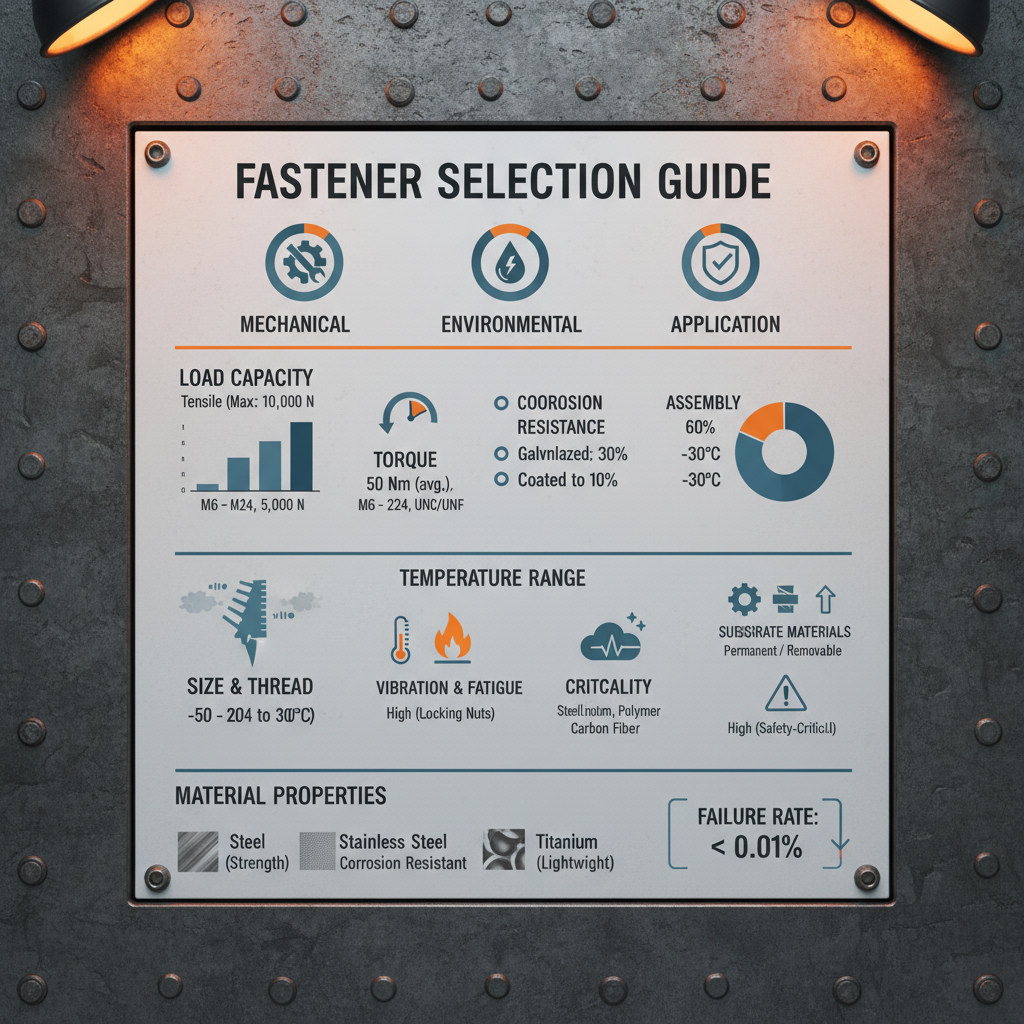
Several core aspects dictate effective fastener selection. Material Compatibility is paramount – ensuring the fastener material doesn’t react with the materials being joined, preventing corrosion or weakening. Load Capacity determines whether the fastener can withstand the anticipated forces without failing, requiring calculations based on tensile strength, shear strength, and fatigue resistance.

Environmental Resistance assesses the fastener’s ability to withstand corrosive environments (saltwater, chemicals), extreme temperatures, or UV exposure. Finally, Installation Method impacts the ease and reliability of assembly; selecting fasteners compatible with available tools and processes is essential. The consideration of these factors ensures the long-term integrity and performance of the assembled structure or product.

Cost-Effectiveness plays a role, but it should never compromise safety or performance. A cheap fastener that fails prematurely is ultimately more expensive than a higher-quality option. Industry Standards & Regulations (like ISO, ASTM) dictate acceptable materials, dimensions, and testing procedures, ensuring compliance and quality control.

Global Applications of Fastener Selection

Fastener selection is crucial across a diverse range of global applications. In the aerospace industry, specialized high-strength, lightweight fasteners are vital for ensuring aircraft safety and performance. The automotive sector relies on precise fastener selection for vehicle assembly, impacting crashworthiness and reliability.

In regions undergoing rapid infrastructure development, such as Southeast Asia and parts of Africa, robust fastener selection is essential for constructing durable roads, bridges, and buildings. In remote industrial zones like oil and gas platforms, corrosion-resistant fasteners are critical for withstanding harsh marine environments.

Furthermore, in post-disaster relief operations, the rapid deployment of shelters and temporary infrastructure often hinges on the availability of standardized, easy-to-use fasteners. The effective application of fastener selection principles can dramatically improve the speed and efficiency of humanitarian aid efforts.

Fastener Selection Methods Comparison

Advantages and Long-Term Value

The benefits of diligent fastener selection are substantial and far-reaching. From a cost perspective, preventing premature failures through proper selection saves on repair and replacement expenses. Sustainability is enhanced by choosing durable fasteners that extend product lifecycles, reducing waste and the demand for new materials.

However, the most compelling advantage lies in reliability and safety. Using the correct fasteners minimizes the risk of structural collapse, equipment malfunction, or personal injury. This fosters trust between manufacturers, engineers, and end-users, safeguarding reputations and ensuring public well-being. This ultimately drives innovation by allowing engineers to confidently push boundaries knowing the foundation is solid.

Future Trends and Innovations

The future of fastener selection is being shaped by several key trends. The development of smart fasteners – equipped with sensors to monitor stress, corrosion, or temperature – offers real-time insights into structural health. Advancements in additive manufacturing (3D printing) are enabling the creation of customized fasteners tailored to specific applications.

The growing emphasis on circular economy principles is driving research into recyclable and biodegradable fastener materials. Furthermore, the integration of digital twins and AI-powered design tools is enabling more accurate and efficient fastener selection processes, optimizing performance and minimizing waste.

Challenges and Solutions

Despite advancements, several challenges remain in fastener selection. Lack of standardized data makes it difficult to compare different fastening options accurately. Complexity of material combinations requires specialized expertise to ensure compatibility.

Supply chain disruptions can impact the availability of specific fastener types. Solutions include developing comprehensive fastener databases, investing in materials science research, and diversifying sourcing strategies. Implementing robust quality control procedures and promoting training for engineers and technicians are also critical.

Leveraging advancements in digital modeling and simulation can help predict fastener performance under various conditions, allowing for more informed decision-making and mitigating risks associated with complex applications.

Summary of Challenges and Proposed Solutions in Fastener Selection

Challenge Impact on Fastener Selection Proposed Solution Implementation Cost (1-10)
Lack of Standardized Data Difficulty comparing fastener options; inaccurate performance predictions Develop comprehensive fastener databases with standardized testing data 7
Material Compatibility Issues Corrosion, weakening of joined materials, premature failure Invest in materials science research; utilize compatibility charts and software 8
Supply Chain Disruptions Delayed projects, increased costs, limited fastener availability Diversify sourcing strategies; build strategic partnerships with suppliers 6
Complex Geometry Applications Difficulties in selecting appropriate fasteners for non-standard shapes Leverage 3D printing and additive manufacturing to create customized fasteners 9
Insufficient Training Incorrect fastener selection, improper installation, reduced performance Provide comprehensive training programs for engineers and technicians 5
Lack of Digital Integration Inefficient design processes, limited data analysis capabilities Implement digital modeling and simulation tools for fastener selection 7

FAQs

What are the key factors to consider when selecting fasteners for a corrosive environment?

Selecting fasteners for corrosive environments requires careful consideration of the material’s resistance to the specific corrosive agents present. Stainless steel alloys, particularly those with molybdenum, offer excellent corrosion resistance. Additionally, coatings like zinc plating, hot-dip galvanization, or specialized polymer coatings can provide an extra layer of protection. The severity of the environment, temperature, and potential for galvanic corrosion between dissimilar metals also need to be assessed. Proper material selection is crucial to prevent premature failure and maintain structural integrity.

How do I determine the correct fastener size and strength for a given application?

Determining the correct fastener size and strength involves calculating the expected loads and stresses on the joint. This requires understanding the tensile, shear, and fatigue requirements of the application. Consulting engineering standards (like ASTM or ISO) and using appropriate safety factors are essential. Online calculators and software tools can assist in these calculations, but a thorough understanding of the underlying principles is critical. Ensure the fastener’s yield strength and ultimate tensile strength exceed the anticipated loads.

What is the difference between bolts and screws, and when should I use each?

Bolts are generally used with a nut to clamp materials together, and often require a hole that is precisely sized for the bolt. They are designed for higher clamping forces and are often used in structural applications. Screws, on the other hand, typically tap their own threads into the material being joined, eliminating the need for a nut. They are generally used for less demanding applications and for fastening softer materials. The choice depends on the application's load requirements, material type, and desired assembly method.

How does temperature affect fastener performance?

Temperature can significantly impact fastener performance. High temperatures can reduce the material’s strength and cause creep, while low temperatures can make materials brittle and prone to fracture. The coefficient of thermal expansion also needs to be considered, as differing expansion rates between the fastener and joined materials can induce stress. Selecting materials with appropriate thermal properties and accounting for temperature variations in the design is crucial for ensuring long-term reliability.

What are some best practices for preventing fastener corrosion?

Preventing fastener corrosion involves several best practices. Select corrosion-resistant materials, apply protective coatings (like zinc or galvanization), use compatible materials to avoid galvanic corrosion, and seal joints to prevent moisture ingress. Regularly inspect fasteners for signs of corrosion and replace them as needed. In harsh environments, consider using corrosion inhibitors or cathodic protection systems. Proper cleaning and maintenance also play a significant role in extending fastener life.

Are there sustainable alternatives to traditional metal fasteners?

Yes, there’s growing interest in sustainable alternatives to traditional metal fasteners. Bioplastics and biodegradable polymers are being explored for certain applications. Additionally, using recycled metals in fastener production reduces environmental impact. Utilizing adhesive bonding instead of mechanical fasteners can also eliminate the need for metal components. However, the performance characteristics and cost-effectiveness of these alternatives need to be carefully evaluated for each specific application.

Conclusion

In conclusion, effective fastener selection is a critical element of successful engineering and construction projects. It’s a complex process that requires careful consideration of material compatibility, load capacity, environmental factors, and industry standards. By prioritizing proper fastener selection, organizations can significantly enhance the safety, durability, and long-term value of their projects, reducing costs and minimizing risks.

Looking ahead, the integration of advanced technologies like smart fasteners, additive manufacturing, and digital modeling will revolutionize the field. Embracing these innovations and investing in ongoing training and research are crucial for staying ahead of the curve. For reliable fastener selection, reach out to industry experts to navigate the complexities and optimize your fastening solutions.

Michael Harrison

Michael Harrison

Michael Harrison is a Factory Manager overseeing a large-scale manufacturing facility producing automotive components. He’s been focused on optimizing production efficiency and reducing maintenance costs. Michael was facing challenges with the consistent failure of fasteners on his automated assembly lines, resulting in significant production delays. After implementing Guanbiao's high-durability fasteners, he saw a dramatic reduction in downtime and maintenance requirements. He appreciates the consistent quality and reliable performance of Guanbiao’s products. Michael is a Six Sigma Black Belt and actively promotes continuous improvement initiatives within his organization. He frequently provides feedback to Guanbiao on product performance and potential areas for enhancement.
Previous The Vital Role of Fastener Video in Modern Industrial Applications
Next The Essential Role of Fastener PDFs in Modern Industry and Infrastructure
Get Your Custom Construction Brackets Today!
Fill out the form below, and our team will help you choose the perfect construction bracket for your project.

If you are interested in our products, you can choose to leave your information here, and we will be in touch with you shortly.