Understanding Astener Dimension for Structural Integrity and Global Standardization
  • Home
  • Top Blog
  • Understanding Astener Dimension for Structural Integrity and Global Standardization
0%

Table of Contents

The concept of astener dimension, while seemingly technical, holds significant relevance in ensuring structural integrity and longevity across diverse applications. From critical infrastructure projects to everyday consumer goods, understanding the precise measurements and tolerances of fasteners – the core of astener dimension – is paramount for safety, reliability, and cost-effectiveness. Ignoring these critical parameters can lead to catastrophic failures, costly repairs, and ultimately, compromise public safety.

Globally, industries are increasingly focusing on standardization and quality control, particularly in sectors like aerospace, automotive, and construction. This demand directly drives the need for accurate and consistent astener dimension specifications. Organizations like ISO (International Organization for Standardization) play a vital role in defining these standards, facilitating international trade and ensuring product compatibility. The rise of global supply chains further emphasizes the importance of unified astener dimension practices.

The significance of astener dimension extends beyond purely mechanical considerations. Proper fastener dimensioning impacts material usage, manufacturing efficiency, and even the environmental footprint of projects. Optimizing fastener size and shape can reduce waste, lower energy consumption, and contribute to more sustainable construction and manufacturing processes. It’s a fundamental aspect of responsible engineering.

astener dimension

The Importance of Astener Dimension

astener dimension

Accurate astener dimension is not merely about selecting the right size bolt or screw; it’s a foundational element of engineering design. It influences the load-bearing capacity of structures, the efficiency of mechanical systems, and the overall durability of finished products. Incorrect astener dimension can lead to premature failure, potentially resulting in significant financial losses and safety hazards.

The impact of astener dimension extends across a vast array of industries. In aerospace, for example, fasteners must withstand extreme temperatures, pressures, and vibrations. In automotive manufacturing, precise fastener dimensions are crucial for ensuring the reliable assembly of engines, chassis, and safety systems. Even in seemingly simple applications like furniture assembly, proper astener dimension contributes to product stability and longevity.

Defining Astener Dimension

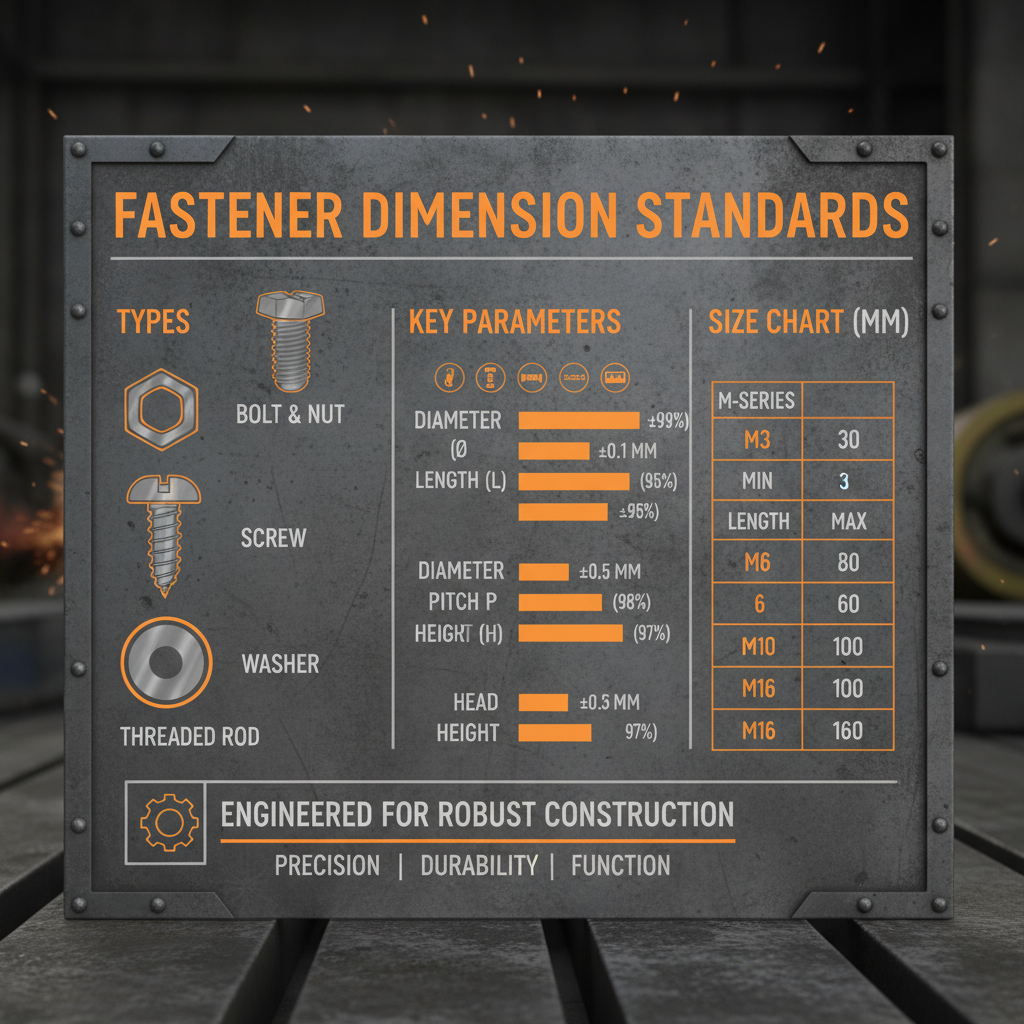
Astener dimension, at its core, refers to the comprehensive set of measurements defining a fastener’s characteristics. This includes its length, diameter, thread pitch, head shape, and material properties. It goes beyond just nominal size to encompass tolerances, which define the acceptable range of variation for each dimension. Standardized astener dimension ensures interchangeability and compatibility of fasteners from different manufacturers.

Understanding astener dimension is critical for designers, engineers, and manufacturers. It dictates how fasteners interact with the materials they join, influencing the strength of the connection and its resistance to various stresses. Proper specification of astener dimension minimizes the risk of loosening, stripping, or breakage, ultimately enhancing the reliability of the assembled product.

The modern context of astener dimension is intrinsically linked to advanced manufacturing techniques, such as CNC machining and automated assembly lines. Precise control over astener dimension enables the production of high-quality, consistent fasteners that meet the demanding requirements of today’s engineered systems.

Core Components of Astener Dimension

Several key aspects contribute to defining comprehensive astener dimension. Firstly, material composition dictates a fastener’s strength, corrosion resistance, and temperature tolerance. Secondly, thread form - whether it’s metric, unified, or a specialized type – is critical for compatibility and load distribution. Careful consideration of these parameters are essential for achieving optimal performance.

Furthermore, head style affects the fastener’s accessibility for installation and removal, as well as its aesthetic appearance. Coating and finish enhance corrosion resistance and lubricity, extending the fastener’s lifespan. Finally, dimensional tolerances, as defined by standards like ISO 2768, specify the allowable deviations from nominal values, ensuring interchangeability and proper fit.

These components are interconnected, and optimizing astener dimension requires a holistic approach. Selecting the appropriate material, thread form, head style, and coating based on the specific application and environmental conditions is crucial for maximizing performance and minimizing the risk of failure.

Practical Applications of Astener Dimension

The application of precise astener dimension principles is evident in a wide range of projects. Consider bridge construction, where high-strength bolts with carefully controlled dimensions are used to connect steel girders, ensuring structural stability and safety. The correct astener dimension here is not a suggestion, but a life-critical requirement.

In the automotive industry, the assembly of engine components relies heavily on accurately sized and threaded fasteners. The integrity of these connections directly impacts engine performance, fuel efficiency, and overall vehicle safety. Using substandard astener dimension in these areas can lead to engine failure and potentially dangerous situations.

Astener Dimension Quality Control Methods

Global Applications & Industry Impact

The demand for precise astener dimension is global, driven by increasingly stringent safety regulations and the need for reliable infrastructure. In Europe, for example, the construction of high-speed rail networks requires fasteners that meet rigorous standards to withstand extreme vibration and stress.

In the rapidly developing economies of Asia, the expansion of manufacturing industries has created a massive demand for high-quality fasteners. China, India, and Vietnam are all experiencing significant growth in sectors that rely heavily on precise astener dimension, such as automotive, electronics, and machinery manufacturing.

Advantages and Long-Term Value

Investing in fasteners with optimized astener dimension yields substantial long-term benefits. Reduced maintenance costs are a direct result of fewer failures and less frequent replacements. Enhanced product durability translates to increased customer satisfaction and brand reputation. And, crucially, improved safety minimizes the risk of accidents and liabilities.

Beyond the tangible benefits, precise astener dimension fosters trust and confidence in engineered systems. It demonstrates a commitment to quality, reliability, and responsible engineering practices. This intangible value is particularly important in industries where safety is paramount, such as aerospace and medical device manufacturing.

Future Trends & Innovation in Astener Dimension

The field of astener dimension is continually evolving, driven by advancements in materials science, manufacturing technologies, and digital simulation. The development of new high-strength alloys and composite materials is enabling the creation of fasteners that offer superior performance in demanding applications.

Digital twins and advanced modeling techniques are also playing an increasingly important role in optimizing astener dimension. By simulating the behavior of fasteners under various stress conditions, engineers can identify potential failure points and refine designs for maximum reliability. The integration of AI and machine learning promises even more sophisticated analysis and optimization capabilities in the future.

Furthermore, sustainable manufacturing practices are gaining prominence. This includes exploring alternative materials, reducing waste, and minimizing the environmental impact of fastener production and disposal. Innovations in coating technologies are also contributing to improved corrosion resistance and extended fastener lifespan, reducing the need for frequent replacements.

Summary of Key Astener Dimension Considerations

Material Type Application Environment Dimensional Tolerance Corrosion Resistance
Stainless Steel Marine Applications ISO 2768-m High
Carbon Steel Indoor Construction ISO 2768-f Medium (with coating)
Titanium Alloy Aerospace Tight, specialized tolerance Excellent
Aluminum Alloy Automotive ISO 2768-e Low (with coating)
Inconel High-Temperature Applications Critical, application-specific Superior
Polymer Fasteners Electrical Enclosures Moderate Excellent (depending on polymer)

FAQS

What is the importance of choosing the correct astener dimension for a critical application?

Selecting the correct astener dimension is paramount in critical applications like aerospace or bridge construction. Incorrect dimensions can lead to structural failure, potentially resulting in catastrophic consequences. Factors like material strength, thread engagement, and tolerance alignment all contribute to the overall reliability of the connection. Properly specified astener dimension ensures the system can withstand anticipated loads and environmental stresses without compromising safety.

How do international standards (like ISO) impact astener dimension?

International standards, like those established by ISO, play a crucial role in harmonizing astener dimension practices globally. They define accepted tolerances, material specifications, and testing procedures, ensuring that fasteners from different manufacturers are interchangeable and meet consistent quality standards. This standardization simplifies global supply chains, promotes trade, and enhances product safety.

What is the relationship between astener dimension and corrosion resistance?

Astener dimension significantly impacts corrosion resistance through material selection and coating application. Using corrosion-resistant materials like stainless steel or applying protective coatings (e.g., zinc plating, hot-dip galvanizing) are critical for environments exposed to moisture, chemicals, or salt spray. Proper astener dimension ensures complete coating coverage and prevents localized corrosion that can weaken the fastener and lead to failure.

How does thread pitch affect astener dimension and connection strength?

Thread pitch, the distance between adjacent threads, is a critical astener dimension parameter. A finer thread pitch provides greater resistance to loosening under vibration and offers a more precise clamping force. However, it can also be more susceptible to cross-threading. A coarser thread pitch is easier to assemble but may not provide the same level of resistance to loosening. Selecting the appropriate thread pitch depends on the application and anticipated loads.

What is the role of dimensional tolerances in astener dimension?

Dimensional tolerances define the acceptable range of variation for each astener dimension, accounting for manufacturing imperfections. Tight tolerances ensure greater precision and interchangeability, but also increase manufacturing costs. Looser tolerances are more cost-effective but may compromise fit and performance. The appropriate level of tolerance depends on the criticality of the application and the required level of precision.

Can digital tools, like CAD software, aid in ensuring accurate astener dimension?

Absolutely. Computer-Aided Design (CAD) software allows engineers to model fasteners with precise astener dimension and simulate their behavior under various loads. This enables early detection of potential design flaws and ensures compatibility with other components. Digital tools also facilitate the creation of accurate manufacturing drawings and automated inspection processes, further enhancing the accuracy and reliability of fasteners.

Conclusion

In conclusion, astener dimension is a fundamental aspect of engineering design and manufacturing, impacting everything from structural integrity and safety to cost-effectiveness and sustainability. A thorough understanding of material properties, thread forms, dimensional tolerances, and applicable standards is crucial for ensuring the reliable performance of fasteners and the systems they support. Ignoring these vital considerations can have serious consequences.

Looking ahead, continued innovation in materials science, manufacturing technologies, and digital modeling will drive further advancements in astener dimension. Embracing these advancements and prioritizing quality control will be essential for meeting the evolving demands of a globalized and increasingly complex world. For more information and access to a comprehensive range of high-quality fasteners, please visit our website: astener dimension.
William Thompson

William Thompson

William Thompson is a seasoned engineer with a focus on marine engineering, working with a prominent shipbuilding company. He’s dedicated to ensuring the structural integrity and longevity of vessels exposed to harsh saltwater environments. William discovered Guanbiao through a recommendation from a colleague, seeking corrosion-resistant fasteners for a major ship repair project. He was impressed by the innovative materials and robust design of Guanbiao’s marine-grade fasteners. He values the comprehensive testing and certification data provided by Guanbiao, ensuring compliance with stringent industry standards. William holds a PhD in Naval Architecture and actively researches advancements in marine materials and construction techniques.
Previous The Cornerstone of Modern Infrastructure Effective Fastener Use and Applications
Next Fastening Solutions For Plumbing Support Systems
Get Your Custom Construction Brackets Today!
Fill out the form below, and our team will help you choose the perfect construction bracket for your project.

If you are interested in our products, you can choose to leave your information here, and we will be in touch with you shortly.