June 11, 2026
In the complex world of industrial piping and plant engineering, ensuring the stability and longevity of piping systems is a critical challenge. The clamped pipe shoe emerges as an indispensable solution for supporting heavy-duty pipes without compromising the integrity of the pipe wall. Unlike welded supports, clamped versions offer a non-intrusive method of installation, making them ideal for high-temperature or corrosive environments where welding is prohibited or risky. This guide explores the technical nuances, advantages, and selection criteria for these essential components to help engineers optimize their piping layouts for maximum safety and efficiency.

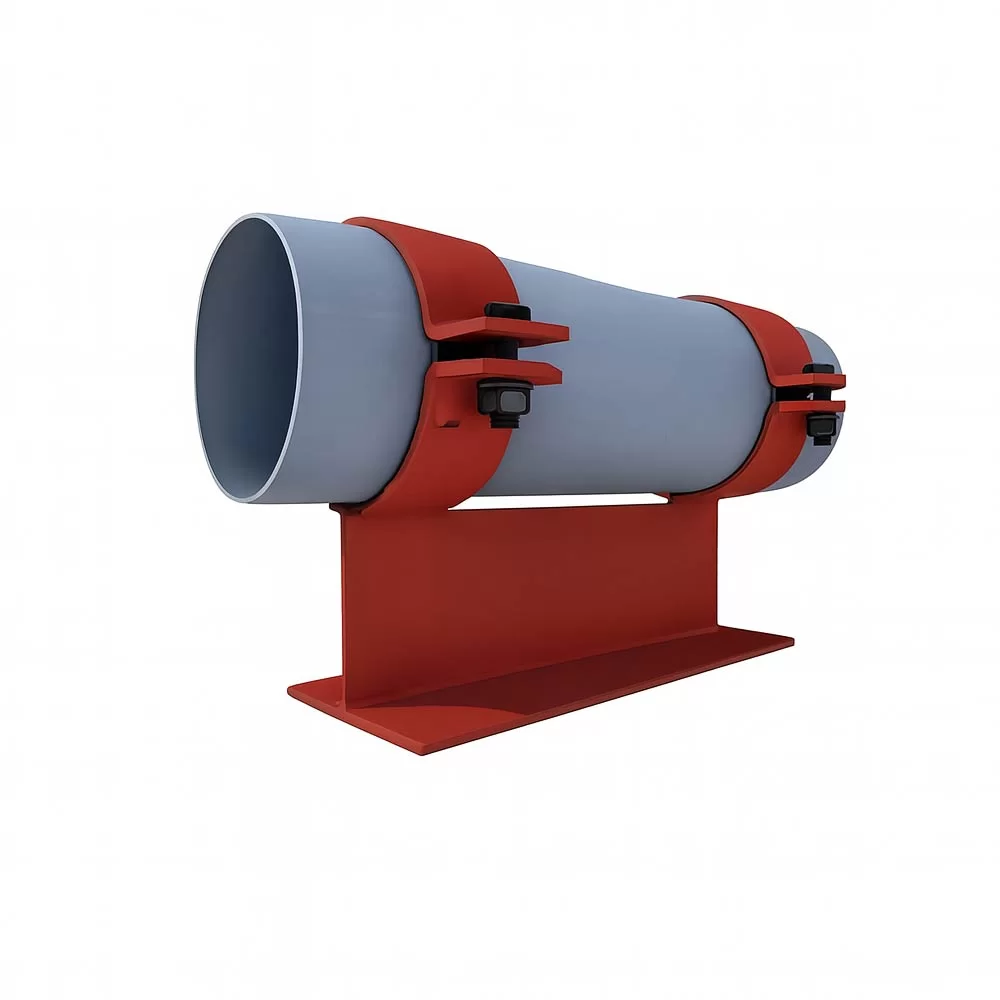
A clamped pipe shoe serves as a structural bridge between the pipe and the supporting beam. The "clamped" design consists of a two-piece shell that wraps around the outer diameter of the pipe, secured tightly with high-strength bolts. This mechanism distributes the vertical load of the pipe and its contents across a wider surface area of the pipe's exterior, preventing localized deformation or "crushing" that can occur with point-load supports. By elevating the pipe, these shoes also provide necessary clearance for insulation materials, preventing the "cold bridge" effect and ensuring that thermal protection remains effective across the entire length of the system.
Pro Tip: Always ensure the clamp torque meets the manufacturer's specifications to prevent slippage under heavy thermal expansion or seismic loads.
The transition from welded supports to the clamped pipe shoe offers several operational benefits. First and foremost is the elimination of Hot Work; because no welding is required on the pipe itself, the risk of fire and the need for expensive permits are significantly reduced. Secondly, it preserves the metallurgical properties of the pipe. Welding can create Heat Affected Zones (HAZ) which are prone to stress corrosion cracking. Clamped shoes avoid this entirely. Furthermore, these supports offer unmatched flexibility during installation and maintenance, as they can be adjusted or relocated without the need for grinding or re-welding, which drastically cuts down on downtime during plant overhauls.
When deciding between a clamped pipe shoe and a welded shoe, engineers must weigh installation speed against long-term permanence. While welded shoes are often perceived as more "permanent," they are invasive. Clamped shoes provide a modular approach that is far superior for systems requiring frequent modifications or for pipes made of exotic alloys where welding would require specialized, costly procedures. The following table highlights the primary technical differences:
Choosing the right material for a clamped pipe shoe is vital for preventing galvanic corrosion and ensuring structural load-bearing capacity. Carbon steel is the industry standard for general applications due to its strength and cost-effectiveness. However, in offshore or chemical processing plants, stainless steel (304 or 316) is preferred to resist oxidation. In extreme cases, galvanized coatings or specialized polymers are used to provide an additional barrier against moisture. It is essential that the shoe material is compatible with the pipe material to avoid electrochemical reactions that could lead to premature failure.

Standardization is key to ensuring that a clamped pipe shoe fits perfectly across various pipe schedules. Specifications typically include the nominal pipe size (NPS), the height of the shoe (which determines the insulation thickness), and the load capacity. Below is a typical specification table for standard industrial clamped shoes:
The implementation of a clamped pipe shoe is more than just a convenience—it is a strategic engineering decision. By eliminating the need for welding, reducing thermal bridging, and ensuring a non-invasive load distribution, these supports enhance the overall safety and longevity of industrial piping systems. Whether you are managing a petrochemical plant or a power station, prioritizing high-quality, precisely engineered clamped shoes will result in lower maintenance costs and improved operational reliability. Choose your materials wisely and ensure proper torque during installation for the best results.
Yes, clamped pipe shoes are specifically designed to accommodate thermal expansion. Because they elevate the pipe, they are often used in conjunction with sliding supports. The clamp ensures the pipe stays securely positioned vertically, while the base of the shoe allows the pipe to move longitudinally along the supporting beam. To further enhance this, low-friction pads (such as PTFE) are often placed between the shoe and the beam to reduce friction and prevent wear during thermal cycling.
Slippage can be prevented by following three main steps. First, ensure the inner diameter of the clamped pipe shoe is a precise match for the outer diameter of the pipe. Second, use a calibrated torque wrench to tighten the bolts to the manufacturer's recommended specifications. Third, in cases of extremely smooth pipe surfaces or high vibration, specialized rubber liners or high-friction inserts can be added between the clamp and the pipe to increase grip without damaging the surface.
While they are suitable for most metals, material compatibility is crucial. For carbon steel pipes, carbon steel shoes are sufficient. For stainless steel or plastic (HDPE) pipes, you must use compatible materials to avoid galvanic corrosion or mechanical abrasion. For soft pipes, the clamp should be designed with a wider contact area or utilize protective liners to prevent the metal edges of the shoe from indenting the pipe wall. Always consult with a supplier like Top Fastener for material matching advice.
The installation of a clamped pipe shoe is significantly faster. A welded shoe requires surface preparation, welding by a certified professional, and often non-destructive testing (NDT) such as X-ray or dye penetrant testing to ensure weld quality. A clamped shoe, conversely, can be installed in minutes using basic hand tools or an impact wrench. In large-scale projects, this can reduce the overall piping installation timeline by several weeks.
Hit enter to search or ESC to close