Comprehensive Fastener Design for Modern Engineering and Manufacturing Applications
  • Home
  • Top Blog
  • Comprehensive Fastener Design for Modern Engineering and Manufacturing Applications
0%

Table of Contents

Fastener design is a critical, yet often overlooked, element of modern engineering and manufacturing. It impacts everything from the structural integrity of skyscrapers and bridges to the reliability of consumer electronics and medical devices. Globally, the fastener industry is a multi-billion dollar market, driven by demand across diverse sectors including automotive, aerospace, construction, and energy. Effective fastener design isn’t just about choosing the right size and material; it's about understanding load distribution, material science, manufacturing processes, and long-term performance characteristics.

The importance of robust fastener design is amplified by increasing demands for lighter, stronger, and more durable products. In an era of sustainability, minimizing material waste and maximizing component lifespan through optimized fastening solutions is becoming paramount. Furthermore, advancements in fields like additive manufacturing and new material development are constantly reshaping the landscape of fastener design, requiring engineers to stay abreast of cutting-edge technologies. fastener design is integral to progress.

Ultimately, sound fastener design translates to safer, more reliable, and more cost-effective products. It’s a discipline that demands a deep understanding of engineering principles, a commitment to quality, and an awareness of the ever-evolving technological landscape. Failure in fastener design can lead to catastrophic consequences, making it an area that deserves continuous innovation and rigorous attention.
fastener design

The Significance of Fastener Design

fastener design

Fastener design is far more than simply selecting a screw or bolt. It is an integral part of the overall design process, directly impacting the reliability, safety, and longevity of any assembled product or structure. A well-executed fastener design considers factors like material compatibility, stress distribution, environmental conditions, and the specific application requirements. Ignoring these details can lead to premature failure, costly repairs, and even catastrophic events. fastener design is paramount.

The significance of effective fastener design extends beyond engineering considerations. It also plays a role in manufacturing efficiency, assembly time, and overall product cost. Optimized fastener designs can reduce the need for complex assembly procedures, minimize material waste, and improve the overall quality of the finished product.

Defining Fastener Design

Fastener design encompasses the entire process of selecting, specifying, and engineering joining elements – such as bolts, screws, rivets, and welds – to securely hold materials together. It involves determining the appropriate size, shape, material, and coating for a fastener based on the intended application and the forces it will encounter. This definition extends beyond the individual component to include the design of the joints themselves, considering hole sizes, thread engagement, and the distribution of stress.

In modern industry, fastener design is inextricably linked to advancements in materials science and manufacturing technology. The development of high-strength alloys, composite materials, and innovative joining techniques has expanded the possibilities for fastener design, allowing engineers to create more efficient and reliable assemblies.

Beyond industrial applications, fastener design also plays a critical role in addressing humanitarian needs. For example, designing robust and easily assembled fasteners for temporary shelters or disaster relief structures is essential for providing safe and dignified housing in emergency situations.

Core Components of Fastener Design

At the heart of effective fastener design lie several core components that must be carefully considered. These include material selection, thread form, drive type, and coating. The choice of material – whether steel, stainless steel, aluminum, or a composite – dictates the fastener’s strength, corrosion resistance, and overall durability. Thread form, such as unified, metric, or self-tapping, influences the fastener's holding power and ease of installation. fastener design considers many variables.

Drive type, encompassing options like Phillips, slotted, hex, and Torx, impacts the torque transmission capability and resistance to cam-out. Finally, coatings—such as zinc, nickel, or polymer—provide corrosion protection and enhance the fastener’s appearance. The interplay between these components directly affects the fastener’s performance and suitability for a given application.

Beyond these basic elements, considerations such as preload, clamping force, and fatigue resistance are also crucial. Preload refers to the initial tension applied to the fastener, while clamping force represents the force holding the joined materials together. Fatigue resistance indicates the fastener’s ability to withstand repeated loading cycles without failure.

Critical Factors in Fastener Design

Several critical factors must be meticulously evaluated during the fastener design process. Durability, or the ability of the fastener to withstand environmental stressors and repeated use, is paramount. This involves considering corrosion resistance, temperature fluctuations, and the potential for fatigue failure. Cost efficiency, while important, should never compromise safety or reliability.

Scalability, the ease with which a fastener design can be adapted for different applications and production volumes, is another key consideration. A scalable design minimizes the need for costly retooling and allows for efficient manufacturing.

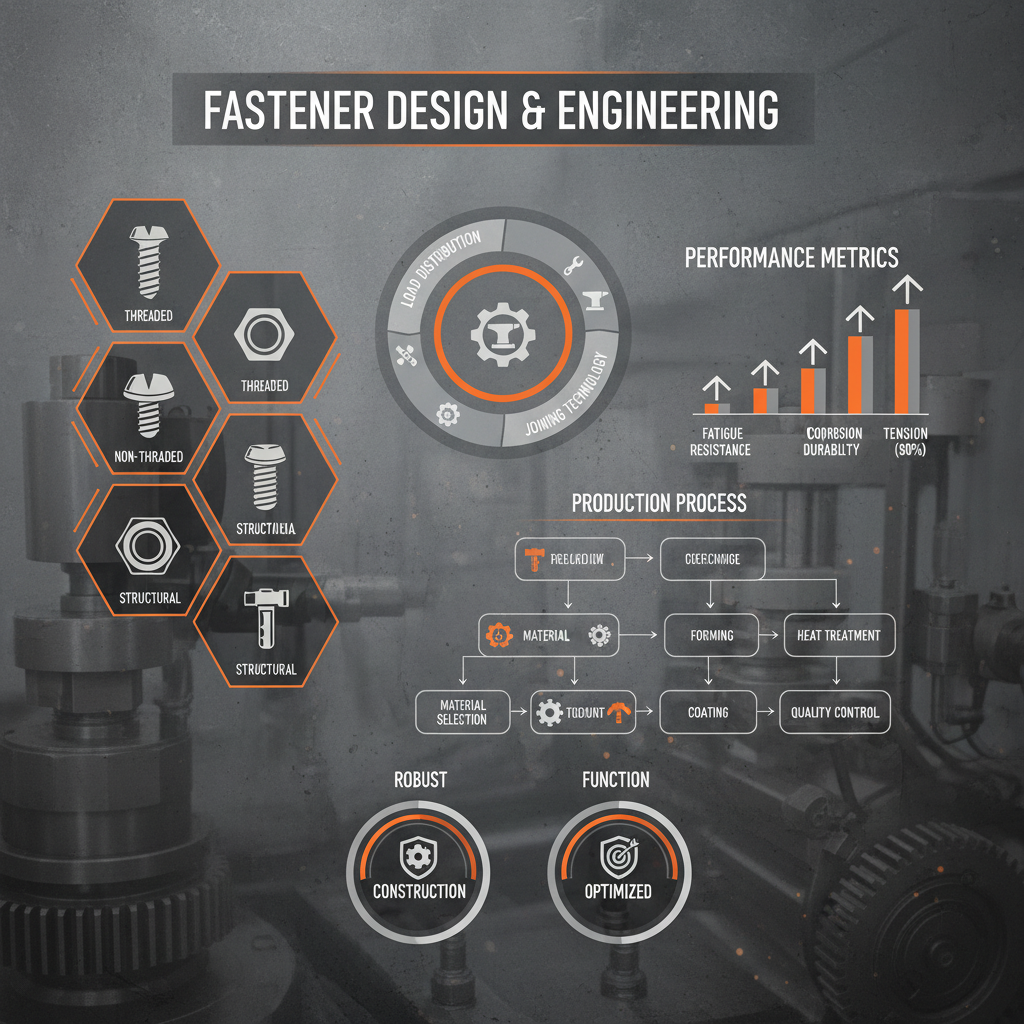
Fastener Design Performance Metrics

Global Applications and Use Cases

The applications of fastener design are incredibly diverse and span virtually every industry. In the automotive sector, fasteners are critical for assembling vehicle frames, engines, and safety systems. In aerospace, high-strength, lightweight fasteners are essential for maintaining the structural integrity of aircraft. The construction industry relies heavily on fasteners for building foundations, framing walls, and securing roofing materials.

In post-disaster relief operations, rapidly deployable shelters utilizing innovative fastener systems can provide safe and secure housing for displaced populations. In remote industrial zones, durable and reliable fasteners are crucial for maintaining infrastructure and equipment. These examples highlight the widespread impact of effective fastener design on global infrastructure and humanitarian efforts.

Advantages and Long-Term Value

The advantages of investing in robust fastener design are numerous and far-reaching. Cost savings can be realized through reduced maintenance, fewer failures, and extended product lifecycles. Sustainability is enhanced by minimizing material waste and maximizing the durability of assembled products. Social impact is positive through increased safety and reliability in critical infrastructure and applications.

From a practical standpoint, well-designed fasteners contribute to improved product performance, reduced assembly time, and enhanced customer satisfaction. Emotionally, they engender trust in the safety and reliability of the products we use every day. Logically, they represent a strategic investment in long-term quality and reduced risk.

Future Trends and Innovations

The field of fastener design is constantly evolving, driven by advancements in materials science, manufacturing technologies, and digital modeling. The development of self-healing materials, capable of repairing minor damage, promises to extend the lifespan of fasteners and reduce maintenance requirements. Additive manufacturing, or 3D printing, is enabling the creation of complex fastener geometries tailored to specific applications.

The integration of digital twins – virtual replicas of physical fasteners – allows for real-time monitoring of performance and predictive maintenance. Furthermore, a growing emphasis on sustainability is driving the development of bio-based fasteners and recyclable materials. These innovations are poised to revolutionize the fastener industry and create more efficient, reliable, and environmentally friendly solutions.

The rise of automation and robotics in manufacturing also necessitates innovative fastener designs that can be easily integrated into automated assembly processes, reducing labor costs and increasing production efficiency.

FAQS

What are the key considerations when selecting a fastener material for a high-temperature application?

When choosing a fastener material for high-temperature environments, factors like creep resistance, oxidation resistance, and thermal expansion are critical. Materials such as stainless steel alloys (specifically, austenitic grades), nickel-based alloys (like Inconel), and certain titanium alloys are often preferred due to their ability to maintain strength and resist degradation at elevated temperatures. Consider the specific temperature range, the presence of corrosive atmospheres, and the required mechanical properties to make the best selection.

How does preload affect the fatigue life of a bolted joint?

Preload is the initial tension applied to a bolt, and it significantly impacts fatigue life. Increasing preload generally improves fatigue resistance because it reduces stress range and minimizes the likelihood of joint separation. However, excessive preload can also lead to yield and eventual failure. Finding the optimal preload is crucial – typically around 75-80% of the bolt's yield strength – to maximize fatigue life and ensure joint integrity.

What are the advantages of using self-tapping screws compared to traditional machine screws?

Self-tapping screws offer several advantages. They eliminate the need for pre-drilled holes, saving time and reducing manufacturing costs. They create their own threads as they are driven into the material, providing a secure and reliable connection. They are particularly useful for thin materials or applications where pre-drilling is impractical. However, self-tapping screws are typically not as strong as machine screws with properly tapped holes.

What role does surface finish play in preventing corrosion in fasteners?

Surface finish is a vital factor in corrosion prevention. A smoother surface finish reduces the number of potential initiation sites for corrosion. Coatings like zinc plating, nickel plating, and powder coating provide a barrier against corrosive elements. The choice of coating depends on the environment and the materials being joined. Proper surface preparation (cleaning, degreasing) is also critical for ensuring the coating’s effectiveness.

How can finite element analysis (FEA) be used to optimize fastener design?

Finite Element Analysis (FEA) is a powerful tool for optimizing fastener design. It allows engineers to simulate stress distribution, predict failure modes, and evaluate the performance of fasteners under various loading conditions. FEA can help identify areas of high stress concentration, optimize fastener geometry, and select the appropriate materials. It reduces the need for costly physical prototyping and testing.

What are some of the latest innovations in fastener locking mechanisms?

Recent innovations in fastener locking mechanisms include prevailing torque nuts (like nylon insert lock nuts or all-metal lock nuts), thread-locking adhesives, and specialized locking washers. New designs also focus on vibration resistance and tamper-proofing. Self-locking screws with unique thread geometries are also gaining popularity, offering a secure and reliable connection without the need for additional locking components.

Conclusion

In conclusion, fastener design is a multifaceted discipline vital to the integrity, reliability, and sustainability of countless products and structures worldwide. From material selection and thread form to preload considerations and emerging technologies, a thorough understanding of fastener principles is essential for engineers and manufacturers alike. By prioritizing careful design and incorporating the latest innovations, we can create safer, more efficient, and more durable systems.

Looking ahead, the continued development of advanced materials, digital modeling techniques, and sustainable manufacturing processes will further revolutionize the field of fastener design. Embracing these advancements will be critical for addressing evolving industry challenges and building a more resilient and sustainable future. For further insights and a comprehensive range of high-quality fasteners, visit our website: www.topfastener.com.

David Chen

David Chen

David Chen serves as a Senior Procurement Manager for a large petrochemical plant in the Gulf Coast region. He is responsible for sourcing all critical industrial components, including pipe hangers and specialized clamps. David first partnered with Guanbiao after experiencing repeated failures with standard pipe supports leading to costly downtime. He was particularly impressed with Guanbiao's ability to deliver custom solutions that could withstand extreme high temperatures and corrosive environments. He values Guanbiao's responsiveness and technical expertise. David is a strong advocate for data-driven procurement and regularly shares performance data with suppliers, consistently recognizing Guanbiao's low defect rate and on-time delivery. He holds a degree in Supply Chain Management.
Previous Understanding Fastener Material for Infrastructure and Manufacturing Applications
Next The Cornerstone of Modern Infrastructure Effective Fastener Use and Applications
Get Your Custom Construction Brackets Today!
Fill out the form below, and our team will help you choose the perfect construction bracket for your project.

If you are interested in our products, you can choose to leave your information here, and we will be in touch with you shortly.