Fastener pdf documents are becoming increasingly vital in modern industry and infrastructure. These standardized documents ensure consistent quality, proper application, and traceability of fasteners – critical components in nearly every manufactured product and construction project. Understanding the intricacies of a fastener pdf is no longer limited to engineers; procurement specialists, quality control personnel, and even end-users benefit from readily available and easily interpretable technical data.
The global reliance on robust fastening solutions drives the demand for comprehensive fastener pdfs. With increasing globalization and complex supply chains, accurate documentation regarding material composition, mechanical properties, and dimensional tolerances becomes paramount. ISO standards, for example, heavily rely on detailed specifications outlined in these documents. Issues arising from incorrect fasteners can lead to catastrophic failures, highlighting the importance of easily accessible and accurate information.
The significance of fastener pdfs extends beyond mere technical specifications. They form a critical part of regulatory compliance, safety protocols, and long-term maintenance strategies. Properly maintained and readily available fastener pdfs reduce risks, improve operational efficiency, and ultimately contribute to a more sustainable and reliable industrial landscape.

The Importance of Fastener PDFs
The value of a comprehensive fastener pdf isn't simply about having data; it’s about having reliable data. A well-constructed pdf ensures that everyone involved – from design engineers to assembly technicians – is working with the same specifications. This minimizes errors, reduces rework, and ultimately saves time and money.
Furthermore, in industries with stringent regulatory requirements, like aerospace and automotive, fastener pdfs serve as critical documentation for compliance and traceability. Maintaining these records isn’t just good practice; it's often legally mandated. Access to a correctly formatted and detailed fastener pdf can be the difference between a successful audit and costly penalties.
Defining Fastener PDFs
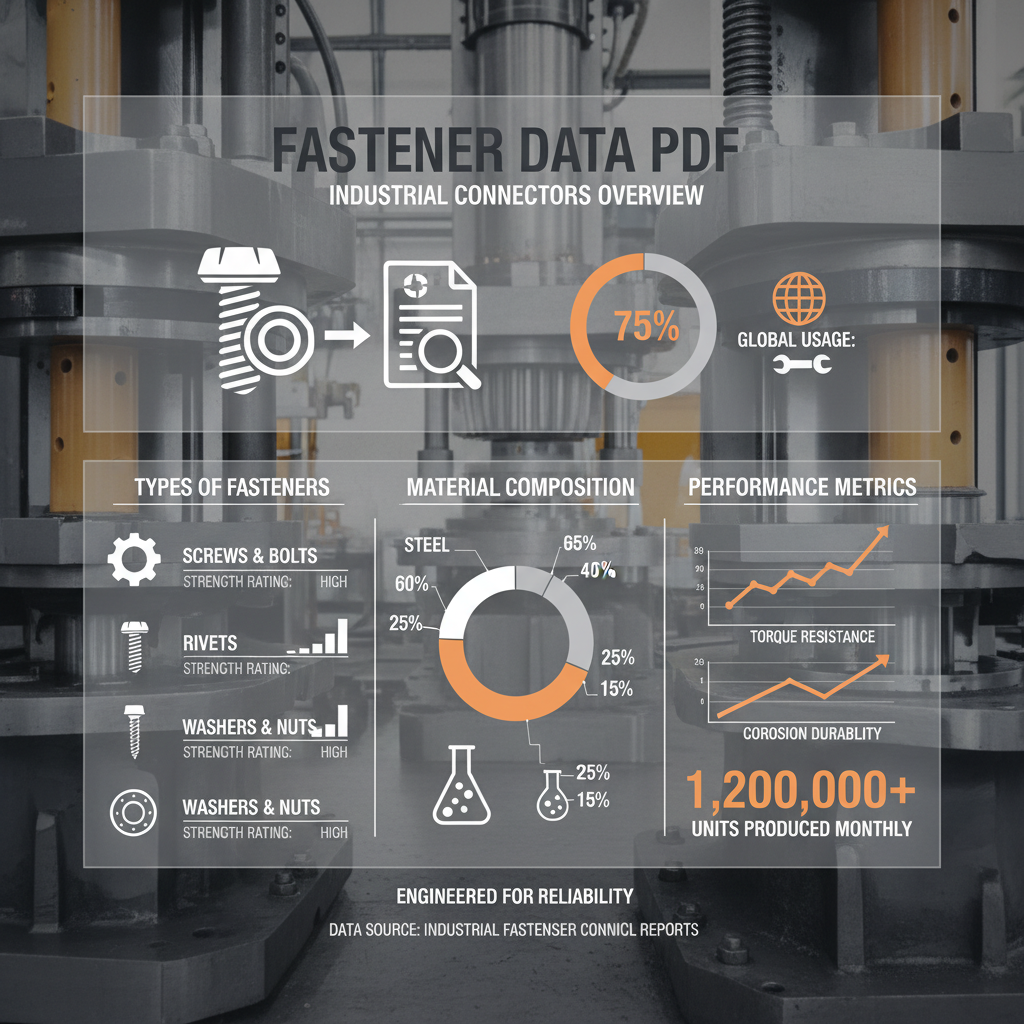
A fastener pdf is a digital document that contains detailed technical information about a specific fastener or a range of fasteners. This information typically includes dimensional drawings, material specifications (including grade and composition), mechanical properties (such as tensile strength and yield strength), and surface treatment details. Often, these pdfs will also include information on relevant standards (like ISO, DIN, ANSI) and recommended torque values.
The need for fastener pdfs arose from the increasing complexity of modern manufacturing and the need for standardized communication across global supply chains. Before digital documentation, reliance on paper drawings and manual data entry led to frequent errors and inefficiencies. The ability to quickly access and share precise fastener information through a standardized pdf format streamlines processes and enhances quality control.
In essence, the fastener pdf functions as a digital blueprint for each fastening component, connecting the design intent to the physical reality of the installed part. This bridge is vital for ensuring structural integrity, preventing failures, and maintaining long-term performance.
Core Components of a Fastener PDF
Several key elements comprise a robust and useful fastener pdf. First, precise dimensional drawings are crucial, detailing all critical measurements including thread pitch, head diameter, and shank length. These drawings should be clear, concise, and adhere to industry-standard drafting conventions. Accurate dimensions ensure proper fit and function.
Secondly, comprehensive material specifications are indispensable. The pdf must clearly state the fastener's material grade, chemical composition, and any relevant heat treatment processes. This information is vital for determining the fastener's strength, corrosion resistance, and suitability for specific applications. Without this, selecting the right fastener is a matter of guesswork.
Finally, mechanical property data, including tensile strength, yield strength, shear strength, and hardness, provides essential information about the fastener's load-bearing capacity. Surface treatment details (e.g., zinc plating, black oxide) and relevant standards (ISO, DIN, ANSI) complete the core components, ensuring a complete and reliable technical reference.
Practical Applications of Fastener PDFs
The application of fastener pdfs extends to a vast array of industries. In the automotive sector, engineers rely on these documents to select the correct fasteners for critical safety components, like brakes and steering systems. Incorrect fasteners could lead to catastrophic failures.
Similarly, in the aerospace industry, where stringent quality control is paramount, fastener pdfs are essential for ensuring the structural integrity of aircraft. These documents are used throughout the design, manufacturing, and maintenance phases. The ability to track fastener specifications and trace their origins is crucial for regulatory compliance.
Fastener PDF Utilization Across Different Fastener Types
Global Applications & Use Cases
In post-disaster relief operations, readily available fastener pdfs can be crucial for quickly sourcing replacement parts and ensuring the structural integrity of temporary shelters and infrastructure repairs. Knowing the exact specifications allows for swift and effective rebuilding.
Similarly, in remote industrial zones, where access to engineering expertise might be limited, a comprehensive fastener pdf library provides a valuable resource for on-site technicians and maintenance personnel. It empowers them to make informed decisions and perform repairs safely and efficiently.
Advantages and Long-Term Value
The advantages of utilizing fastener pdfs are multifaceted. Cost savings are realized through reduced errors, minimized rework, and optimized inventory management. Sustainability is enhanced through the selection of appropriate materials and the extended lifespan of assembled products. Social impact is improved through increased safety and reliability.
Beyond the tangible benefits, fastener pdfs foster trust and confidence between suppliers, manufacturers, and end-users. Clear and accurate documentation demonstrates a commitment to quality and transparency. This, in turn, builds strong relationships and fosters long-term collaborations.
Future Trends and Innovations in Fastener PDFs
The future of fastener pdfs is intertwined with advancements in digital technology. We can expect to see increased integration with Building Information Modeling (BIM) systems, allowing for seamless data exchange throughout the construction lifecycle. The adoption of Augmented Reality (AR) technologies will enable technicians to overlay fastener specifications onto physical components using their mobile devices.
Furthermore, the incorporation of QR codes into fasteners themselves, linking directly to the corresponding pdf, will enhance traceability and simplify maintenance procedures. As sustainability becomes increasingly important, fastener pdfs will likely include more detailed information on the environmental impact of different materials and manufacturing processes.
Finally, the rise of digital twins – virtual representations of physical assets – will require highly detailed and accurate fastener data, further driving the demand for comprehensive and dynamically updated fastener pdfs.
Summary of Challenges and Solutions Related to Fastener PDFs
| Challenge |
Impact on Fastener PDF Use |
Proposed Solution |
Implementation Difficulty (1-10) |
| Data Standardization |
Inconsistent formats hinder data exchange and analysis. |
Adopt standardized data schemas (e.g., ISO 8000-110) for fastener data. |
7 |
| Version Control |
Using outdated fastener pdfs can lead to errors. |
Implement a robust version control system with clear revision tracking. |
5 |
| Data Accessibility |
Difficult to find the correct fastener pdf quickly. |
Create a centralized, searchable database of fastener pdfs. |
6 |
| Data Completeness |
Missing information in fastener pdfs leads to uncertainty. |
Establish mandatory data fields for all fastener pdfs. |
8 |
| Integration with Systems |
Lack of integration with CAD/CAM and ERP systems. |
Develop APIs for seamless data exchange between systems. |
9 |
| Maintaining Accuracy |
Information becomes outdated or incorrect over time. |
Implement regular data audits and update procedures. |
6 |
FAQS
Digital fastener pdfs offer numerous advantages, including improved accessibility, enhanced searchability, version control, reduced storage costs, and streamlined data sharing. They minimize errors associated with manual data entry and facilitate faster decision-making. Furthermore, digital formats support integration with other engineering and manufacturing systems, enhancing overall efficiency.
Ensuring accuracy requires a robust quality control process. Verify that the data originates from a reputable source, such as the fastener manufacturer or a certified testing laboratory. Implement a version control system to track changes and prevent the use of outdated information. Regularly audit the data and compare it against physical samples to identify any discrepancies.
A comprehensive fastener pdf should include detailed dimensional drawings, material specifications (grade, composition, heat treatment), mechanical properties (tensile strength, yield strength), surface treatment details, relevant standards (ISO, DIN, ANSI), recommended torque values, and traceability information, such as batch numbers and manufacturer details.
Fastener pdfs provide essential documentation for demonstrating compliance with industry regulations and standards, particularly in safety-critical applications like aerospace, automotive, and construction. They provide evidence of material traceability, quality control procedures, and adherence to specified performance requirements. Accurate documentation is crucial for successful audits and avoiding legal penalties.
Emerging trends include integration with BIM systems, the use of QR codes for enhanced traceability, adoption of augmented reality for on-site verification, and development of digital twins that rely on highly detailed fastener data. There’s also a growing focus on incorporating sustainability information, such as the environmental impact of materials and manufacturing processes.
Implementing a centralized, searchable database is essential for managing a large library of fastener pdfs. Utilize metadata tagging, keyword indexing, and optical character recognition (OCR) technology to enable efficient searches. Consider using a document management system with version control and access control features to maintain data integrity and security.
Conclusion
In conclusion, fastener pdfs are far more than just technical documents; they are vital components of modern engineering, manufacturing, and infrastructure. They ensure quality, compliance, and safety, while also driving efficiency and sustainability. The ability to accurately access and interpret this information is becoming increasingly critical in a globally interconnected and technologically advanced world.
Looking ahead, continued innovation in digital documentation, data management, and integration with emerging technologies will further enhance the value of fastener pdfs. Organizations that embrace these advancements will be well-positioned to optimize their operations, reduce risks, and maintain a competitive edge. For more information and access to a comprehensive library of fastener specifications, visit our website: www.topfastener.com