

Clamps types are fundamental fastening solutions used across a vast spectrum of industries, from manufacturing and construction to automotive and aerospace. Their ability to securely hold objects together, resist vibrations, and provide adjustable pressure makes them indispensable components in countless applications. Understanding the nuances of different clamps types – their materials, mechanisms, and optimal uses – is crucial for engineers, technicians, and anyone involved in assembly, maintenance, or repair work. The global demand for efficient and reliable clamping solutions continues to grow, driven by advancements in technology and the increasing need for robust and secure fastening systems.
The relevance of clamps types extends beyond purely industrial contexts. They play a critical role in ensuring safety and reliability in infrastructure projects, medical equipment, and even everyday consumer products. According to data from the International Organization for Standardization (ISO), the demand for standardized clamping components is increasing steadily, reflecting a global emphasis on quality control and interoperability. Addressing challenges related to clamp selection, material compatibility, and long-term performance is paramount to mitigating risks and optimizing efficiency in a wide range of applications.
Ultimately, a thorough grasp of various clamps types empowers professionals to select the most appropriate solutions for specific needs, ensuring structural integrity, operational efficiency, and cost-effectiveness. This knowledge contributes to safer, more durable, and more reliable products and infrastructure worldwide.
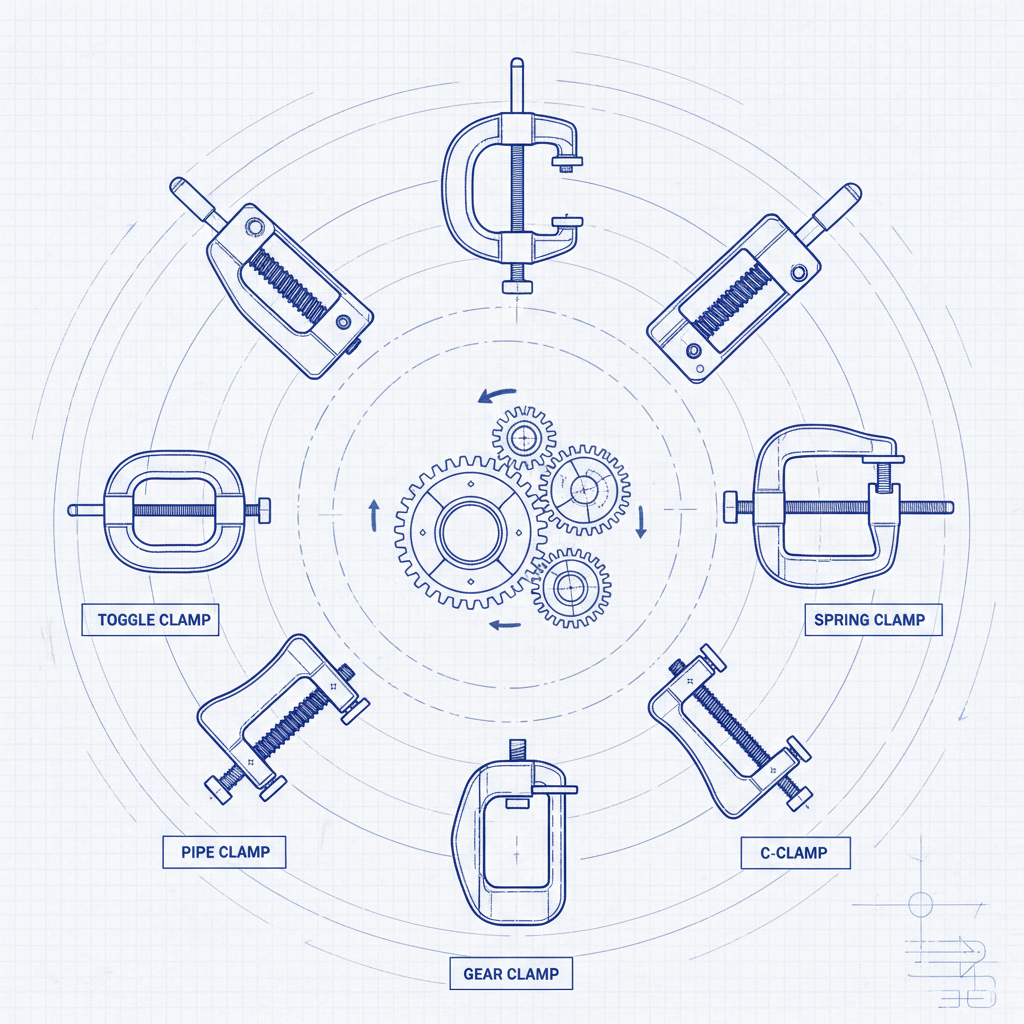

The core function of clamps types lies in their ability to apply a controlled force to securely fasten objects together. This simple principle underpins their widespread use in various applications, from temporarily holding components during welding to providing permanent, high-strength joints. Different clamps types excel in specific scenarios, dictated by factors such as the shape and size of the objects being clamped, the required clamping force, and the environmental conditions.
A proper understanding of these factors is critical for selecting the most appropriate clamp type for a given task. For instance, spring clamps are ideal for quick, temporary fastening, while toggle clamps offer a robust locking mechanism for more demanding applications. The material composition of the clamp—steel, aluminum, plastic—also plays a vital role in determining its durability and resistance to corrosion.
Selecting the appropriate clamps types requires evaluating several key factors. Consider the size and shape of the objects being clamped, the required clamping force, the materials involved, and the environmental conditions. For example, heavy-duty applications may necessitate toggle clamps or C-clamps, while temporary fastening tasks are well-suited for spring clamps. Material compatibility is also crucial; corrosion-resistant clamps are essential in wet or corrosive environments. Always prioritize safety and ensure the clamp's capacity exceeds the expected load.
Maintaining consistent clamping force is vital for reliable performance. For adjustable clamps, carefully calibrate the clamping pressure using a torque wrench or pressure gauge. Regularly inspect clamps for wear and tear, as worn components can reduce clamping force. Utilize self-locking mechanisms where available to prevent accidental release. In automated applications, consider incorporating sensors and feedback control systems to monitor and adjust clamping force in real-time.
Safety should always be a top priority. Wear appropriate personal protective equipment (PPE), such as safety glasses and gloves. Ensure the clamp is properly seated and aligned before applying force. Avoid exceeding the clamp’s load capacity. Never modify clamps or use them for unintended purposes. Regularly inspect clamps for cracks, corrosion, or other damage. Be mindful of pinch points and potential hazards.
Material selection significantly influences a clamp's strength, durability, and corrosion resistance. Steel clamps offer high strength and rigidity, making them suitable for demanding applications. Aluminum clamps are lightweight and corrosion-resistant, ideal for applications where weight is a concern. Plastic clamps are cost-effective and non-conductive, but generally have lower strength. Consider the specific environment and load requirements when choosing a clamp material.
Standardization plays a crucial role in ensuring compatibility, interchangeability, and quality control. Organizations like ISO develop standards for clamping components, defining dimensions, tolerances, and performance criteria. Adhering to these standards simplifies sourcing, reduces the risk of errors, and promotes interoperability between different systems. Standardized clamps also facilitate easier maintenance and repair.
Proper maintenance is essential for extending the lifespan of clamps. Regularly clean clamps to remove dirt, debris, and corrosive substances. Lubricate moving parts to ensure smooth operation. Inspect clamps for wear and tear, and replace damaged components promptly. Store clamps in a dry, protected environment to prevent corrosion. Avoid over-tightening or subjecting clamps to excessive force.
In conclusion, understanding clamps types is paramount for professionals across diverse industries. From selecting the appropriate clamp for a specific application to ensuring its proper maintenance, a thorough knowledge of these essential fastening solutions contributes to improved safety, efficiency, and product reliability. The key takeaways include the importance of considering factors such as clamping force, material compatibility, and environmental conditions, as well as the benefits of adhering to industry standards.
Looking ahead, the future of clamps types is poised for innovation, with the integration of smart technologies, advanced materials, and automated systems. By embracing these advancements and prioritizing sustainability, organizations can unlock new levels of performance and efficiency. We invite you to explore our comprehensive range of clamps and fastening solutions at clamps types.

Hit enter to search or ESC to close